A beautiful, high-end fancy seder plate might be the perfect centerpiece at the table. Other times though, the attraction might radiate from the memories of a beat-up, or a child-made, or an artistic piece that when placed on the table, manages to bring loved ones who aren’t around, to their seats. . . at least in our hearts.
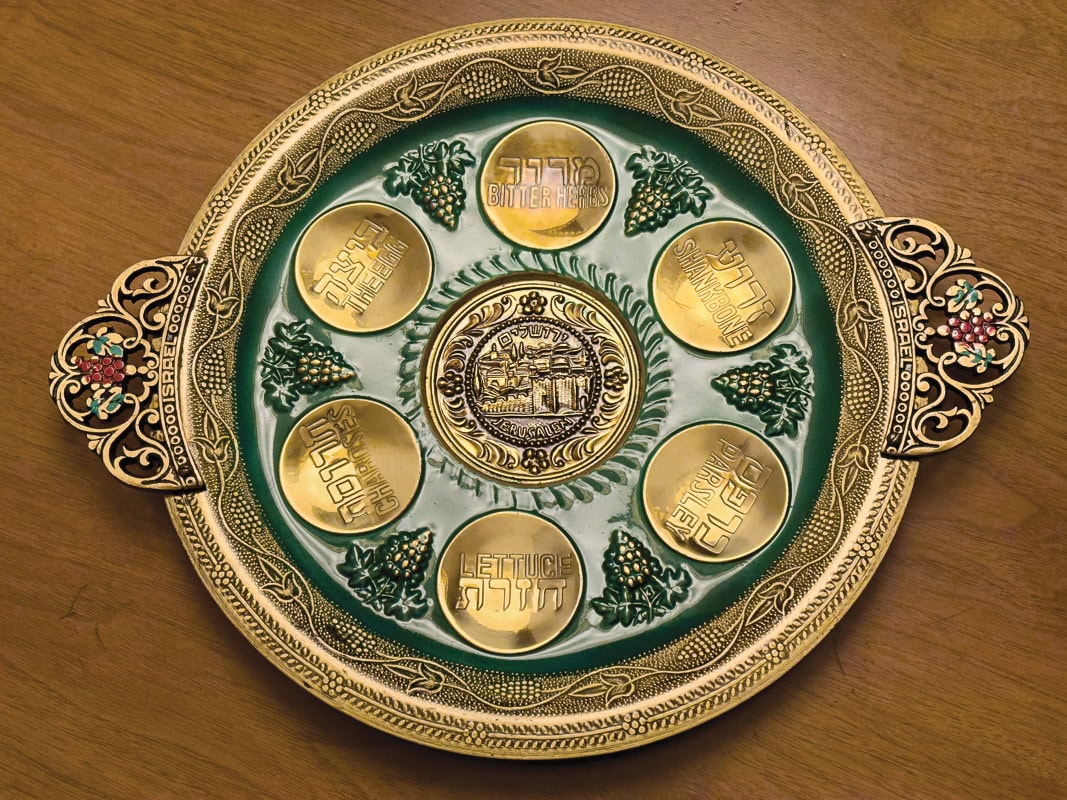
My own seder plate does just that. On my first trip to Israel when I was 17, I purchased a seder plate for my grandparents. Eventually, it made its way to my mom’s table. Then, when my husband and I held our first seder, my mom happily handed it over, as she was thrilled to pass the task of hosting this holiday on to us. “You keep it,” she said without a hint of hesitation or appearance that she might ever take it back. After cleaning it that first year, I realized I had basically bought a souvenir. The back of the plate has a hook for easy hanging on the wall! Never mind, all these decades later, it remains in good condition, with clearly labeled space for everything needed – the parsley, haroset, egg, etc. And when it goes on my seder table, it reminds me of so many memories and relatives. . . and does the job!
I’m not alone in my affection for the “not so perfect” piece of Judaica for the holiday. Susan Cohen, Lynn Shoenbaum, and Sharon Grossman share images of their seder plates here, and the stories that go along with them.
Susan and Andy Cohen
“We have a seder plate that I really love — we bought it from the Judaica shop at our synagogue in Northern Virginia,” says Susan Cohen. This was the plate, she says, that she and her husband, Andy, used “since our kids were young” at their annual Passover seders.
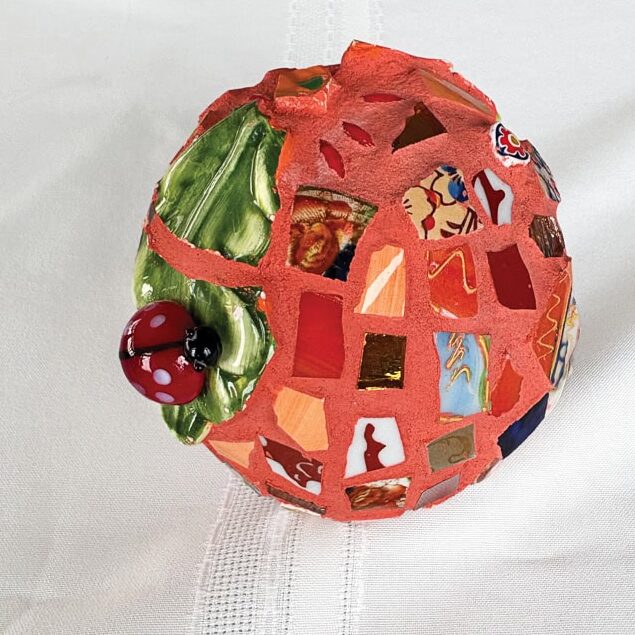
An even more special treasure for Cohen, however, is a mosaic orange that her Aunt Alice (of blessed memory) created for her family “that we display on the seder plate each year. My aunt was a very talented artist who studied Kabbalah. That inspired her,” says Cohen, “to create the orange to emphasize the centrality of women in Jewish families – in response to the apocryphal story of a rabbi who dismissively said a woman belongs on the bima the way an orange belongs on a seder plate.”
Cohen says, “I smile and think of her every year when I place it on our table.”
Lynn Schoenbaum
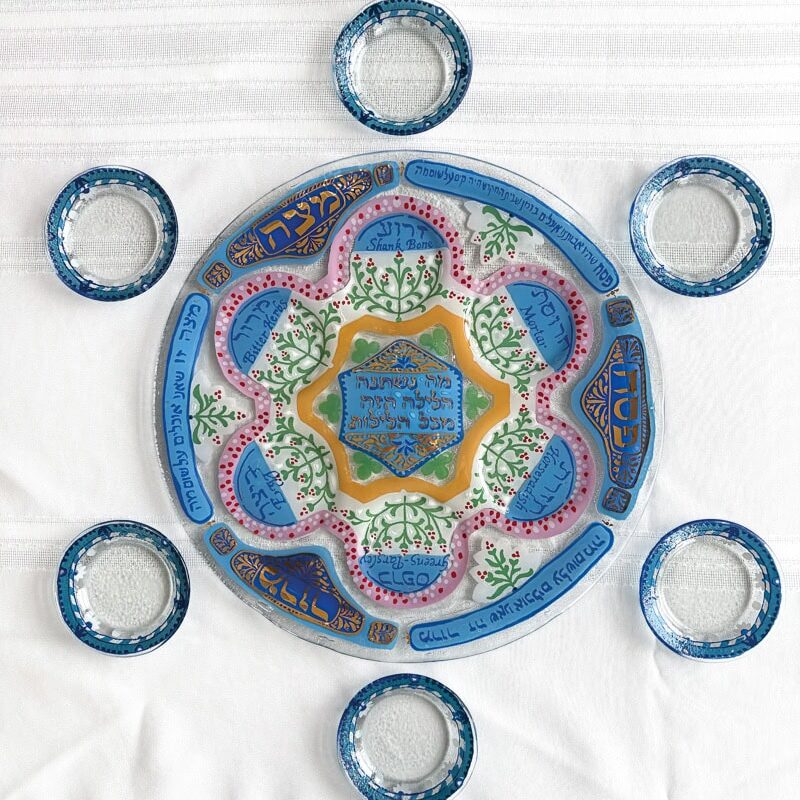
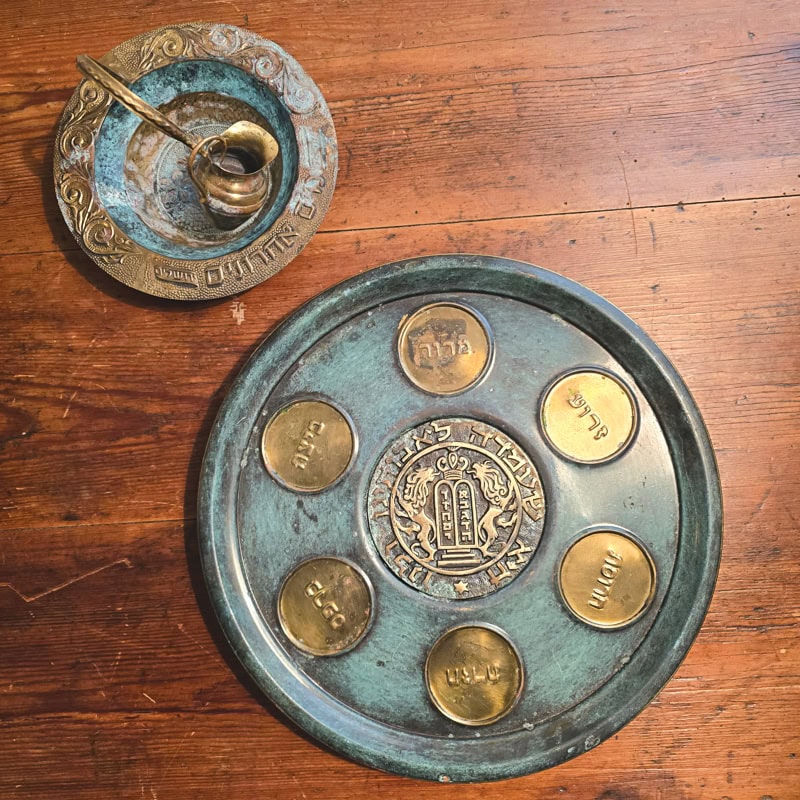
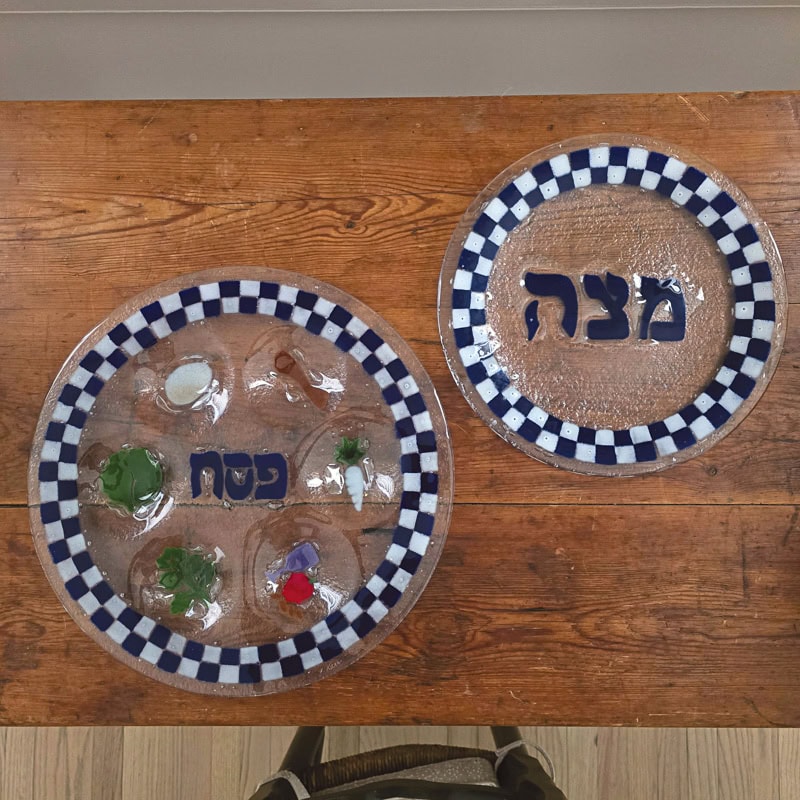
Old and ‘newish’ seder plates comprise Lynn Schoenbaum’s collection.
The older plate is made of metal. Schoenbaum’s mother, Ruth Ann, set this one on her table at family seders in Newport News and later in Williamsburg.
“My grandfather always sat at the head of the table,” recalls Schoenbaum. “I remember him raising the plate to describe the significance of each item placed on it. “My Uncle Louis used it at a recent seder, and it brought back many fond memories.”
The ‘newish’ glass plates are from The Paisley Hippo, an artsy gift shop, that Schoenbaum owned in Ghent.
And now, the plates, with much different looks occupy distinct but equally important memories of seders for Schoenbaum.
Sharon Grossman
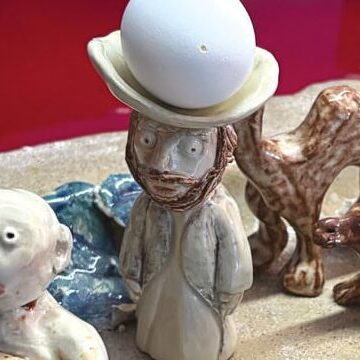
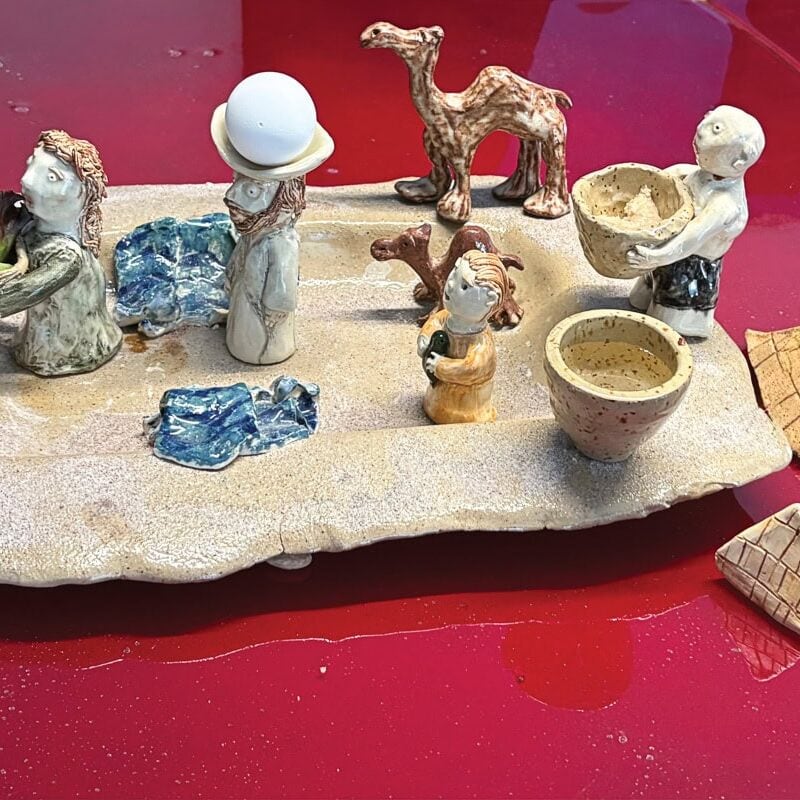
“I actually made my ceramic seder plate and all ‘the pieces,’” says Sharon Grossman, a local artist.
Grossman says she made it in the 1990s and has used it since. “I just got inspired to make something meaningful. I’m very proud of it.”
The plate depicts the children of Israel crossing the desert with the Red Sea parting. A former slave carries a roasted egg on his head, for instance, and a little boy holds a frog. To create the plate, she even used sand to conjure up the desert.
In addition to lots of camels, Grossman’s seder table includes pyramid salt and pepper shakers, which get left behind in Egypt.