
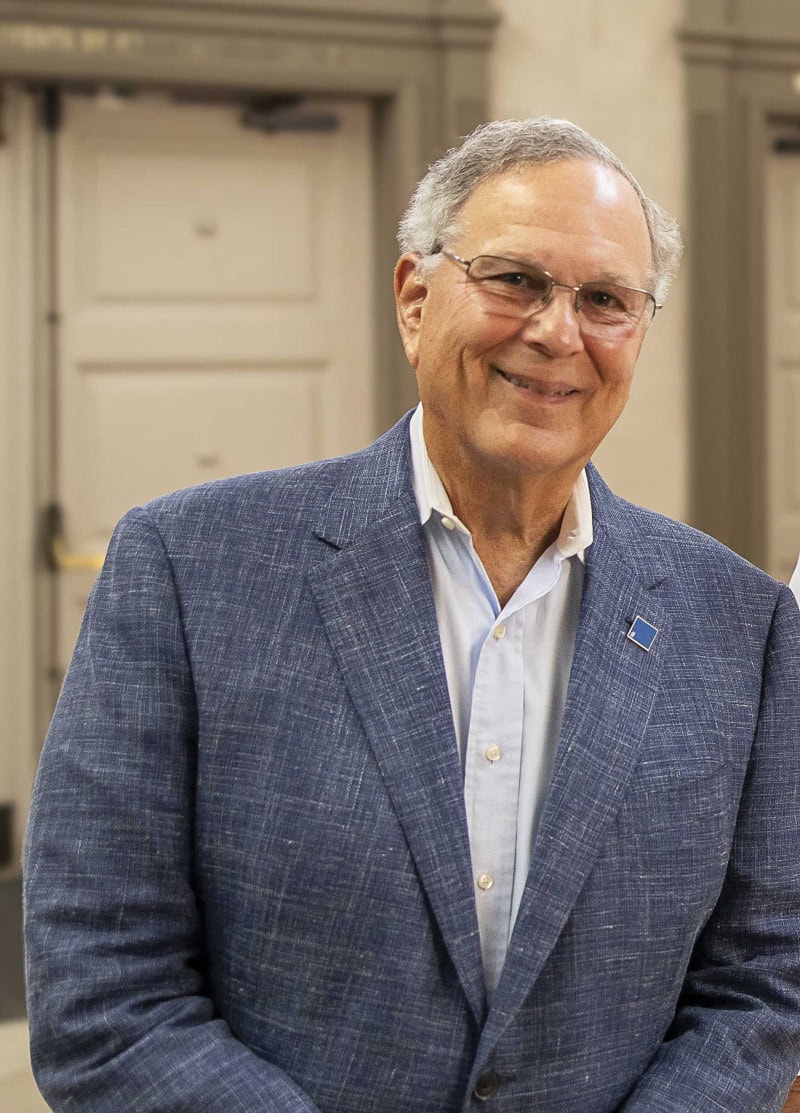
Jay Kossman doesn’t think about legacy as something distant or abstract. For him, it’s a daily practice shaped by intention, experience, and a deep sense of responsibility to others.
Growing up in Norfolk’s West Ghent neighborhood, Kossman’s early connection to Jewish life was more cultural than religious, he says. It wasn’t until he spent nearly 30 years away, primarily in Connecticut, that his understanding of Judaism began to take shape in a more meaningful way. Through study and guidance by a Chabad rabbi, he developed a deeper appreciation for the principles that continue to influence him today.
Among them is tikkun olam: the call to repair the world.
“That idea isn’t theoretical,” Kossman says. “It’s something you’re meant to live out in how you show up, how you support, and how you contribute.” That belief has become the foundation of his philanthropic philosophy.
Alongside his wife, Joyce, Kossman takes a strategic approach to philanthropy, prioritizing institutions that educate, equip, and create lasting impact. Their giving reflects a belief that strong organizations don’t just meet immediate needs; they shape people, strengthen communities, and extend their influence over time.
That commitment has not gone unnoticed. In 2025, Kossman was recognized as a Distinguished Alumni by Old Dominion University, an acknowledgment of his sustained contributions of time, talent, and resources in service to the broader community.
Rather than focusing on short-term outcomes, Kossman is drawn to long-term influence. “We focus on supporting institutions that help people learn how to think and lead,” he says. “If you invest in that, the return isn’t immediate, but it is lasting.”
That same thinking shapes his views on sustaining Jewish life. Kossman believes some of the most important investments happen early, through experiences such as Jewish day school and camp. “That’s where identity starts to take hold,” he says. “It’s where relationships are formed, where people build lifelong friendships, meet their partners, and begin to understand what it means to be part of something bigger than themselves.”
In those environments, he sees more than education or recreation. He sees continuity taking root. “You have to invest early,” he adds. “Those experiences stay with people, and they shape how connected they feel later in life.”
As a member of Tidewater Jewish Foundation’s board of directors, Kossman brings this same strategic lens to conversations around legacy giving, particularly when it comes to engaging future donors. “One of the biggest challenges is helping people understand the ‘why,’” he says. “If you can connect people to the purpose behind giving, if they understand the impact, that’s what sustains it.”
For Kossman, legacy isn’t about a final gift or a single decision. It’s about aligning values with action, again and again.