
Few diagnoses change the course of a family’s journey quite like Alzheimer’s disease. It reaches far beyond the individual, touching spouses, children, grandchildren, friends, and entire communities. Today, more than 7.4 million Americans age 65 and older are living with Alzheimer’s, and nearly 13 million family members and friends provide care and support for loved ones living with dementia.
Behind every statistic is a personal story; one of resilience, adaptation, love, and connection. While there is still much to learn about Alzheimer’s, researchers now know that changes in the brain associated with the disease can begin years before symptoms appear. For most families, however, the journey begins with subtle changes in memory, thinking or daily routines, prompting a search for answers and, ultimately, an opportunity to find support, resources, and community.
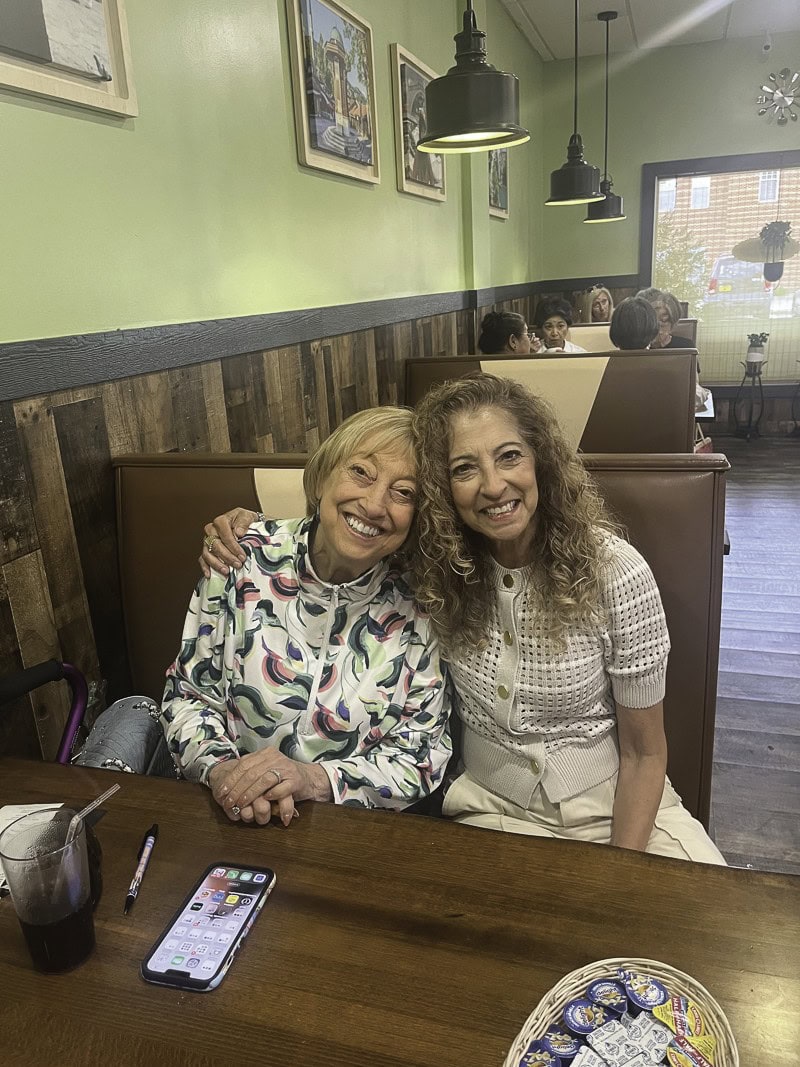
That was the case for Linda Spindel, who was diagnosed with Alzheimer’s disease two years ago. Spindel speaks openly about her diagnosis and proudly shares the small victories that continue to bring her joy.
Losing her ability to drive has been the most difficult adjustment, Spindel says. Yet even that challenge is something she approaches with optimism. In a moment that perfectly captures her spirit, Spindel reflects on her diagnosis through the lens of driving: “It’s been a good ride.” While there are more red lights than she would like, she laughs and adds that she knows the road well. Her positivity is both inspiring and contagious.
Spindel offers encouragement to others who are newly diagnosed. Rather than withdrawing from family, friends, or community support, she encourages people to focus on what they can still do rather than what they can no longer do. “I feel lucky,” she says, explaining that she is more intentional than ever about nurturing relationships and finding joy in everyday moments.
Her husband, Ron Spindel, says much of Linda’s positive outlook can be attributed to the support they have received from family and the broader community. In particular, he credits Marcia Futterman Brodie, founder of Marcia Trains, LLC, with helping them navigate this chapter of life by providing guidance, resources, encouragement, and understanding. For Brodie, this work is personal. “No one should have to walk this journey alone,” she says.
That philosophy is shared by Beth Sholom Village, where leaders have witnessed how the support of caring professionals, friends, and loved ones can make a profound difference for individuals living with Alzheimer’s disease and the families who care for them, helping them find strength and connection along the way. To help meet these needs, Beth Sholom Village has earmarked funding for Jewish Family Service to launch an Alzheimer’s Café under Brodie’s guidance. The initiative will create opportunities for families to gather, share experiences, and find support in a welcoming environment, helping ensure that no one faces the journey in isolation.
Spindel’s story serves as a powerful reminder that while Alzheimer’s disease may alter the road ahead, it does not diminish the importance of joy, purpose, or meaningful relationships. With the right support and a caring community, even the most challenging roads can be traveled with hope.
Lauren Krajesky, LNHA, CDP is Beth Sholom Village’s executive director.