
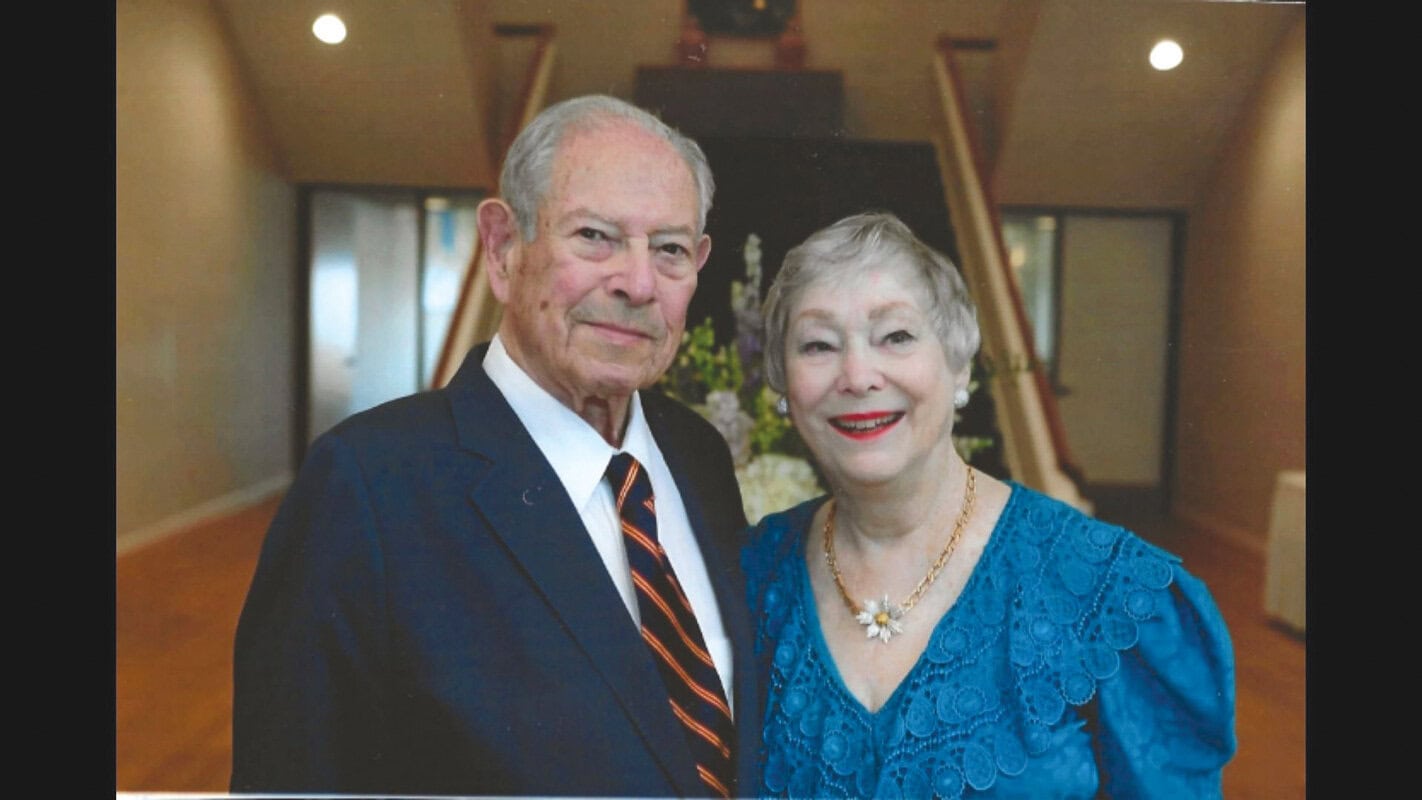
Bettie Minette Cooper remembered every person she met.
Always known as Minette, she died on October 14, 2025, at 87 years young, leaving a legacy of commitment to family, her synagogue, the arts, and a variety of civic organizations and projects.
Cooper’s story began in New York – but just for her birth – as it really took root in Vicksburg, Mississippi, where she was raised as an only child in a small, but vibrant Jewish community. Her upbringing was shaped by two powerful forces: a mother who instilled a love of music and Jewish life, and a father who modeled civic responsibility as a respected businessman and community leader.
In Vicksburg, she regularly attended Shabbat services and experienced a uniquely integrated Southern Jewish life, where Jewish and non-Jewish friends often attended one another’s services. That sense of openness and belonging stayed with Cooper throughout her life, impacting many of her future endeavors.
When Cooper was just 10 years old, her mother died, and her father struggled to raise her alone. After his remarriage, when she was 12, she attended The Knox School, a boarding school in upstate New York. There she developed an early independence without losing her connection to Jewish life, continuing her religious education, writing essays to her rabbi and preparing for confirmation from afar. Cooper attended Smith College for two years, then transferred and graduated from Barnard to be in New York City with her new husband, Charles Cooper, who was studying at Columbia Law School.
When the couple moved to Norfolk in 1962 to be near his family, she immediately became a part of the community, especially at Ohef Sholom Temple, where she made history as the first female president of the congregation, serving from 1985 to 1987.
For Cooper, leadership was never about authority. It was about inclusion, and that philosophy extended into nearly every corner of Jewish communal life. She served on the Jewish Community Center of Tidewater board, the National Federation of Temple Sisterhoods board, the Goldring/Woldenberg Institute of Southern Jewish Life, and the Southern Jewish Historical Society board, eventually serving as president. And that wasn’t all.
She was also deeply involved in the Jewish Museum & Cultural Center in Portsmouth. Cooper championed Ohef Sholom Temple’s Archives, supported the creation of oral-history video interviews in the 1980s and 1990s, and worked to ensure that institutional memory would not depend solely on individual recollection, spearheading the congregation’s 150th celebration, complete with a museum-like display of its history, which continues to adorn the synagogue’s halls.
That commitment to community also found expression through music. More than 30 years ago, Cooper proposed establishing a congregational choir at OST.
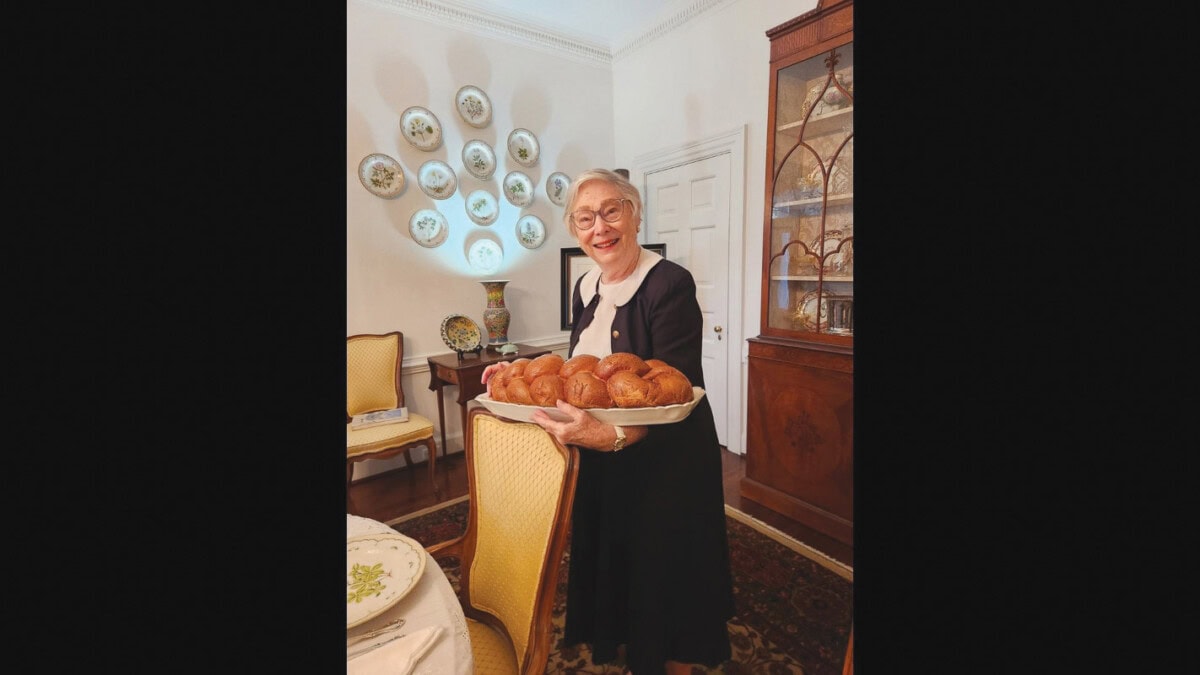
“For Minette, I believe the temple choir was an intersection of two very meaningful elements in her life – music and faith,” says Chuck Woodward, Ohef Sholom Temple’s music director. “For its members, the choir became a community. Minette sang with the choir for nearly 40 years, helping nurture a space where relationships formed alongside the music.”
Cooper’s belief in building community extended far beyond Jewish life. She saw the arts as another way people could gather, connect, and understand one another. Her most enduring impact came through Arts for Learning Virginia (formerly Young Audiences), where she served as a donor, program leader, and board president, and as a member of the organization’s national board of directors. Under her influence, the organization grew to more than 600 performances annually, bringing arts education directly to more than 38,000 students in schools across the state.
She also worked closely with the Virginia Symphony Orchestra (serving as president the same time she was president of Ohef Sholom) as well as numerous regional arts and educational institutions – receiving multiple awards for her effectiveness and contributions as a board member and leader.
Her influence expanded from local organizations to statewide advocacy efforts, including the creation of the Cultural Alliance of Greater Hampton Roads and as a board member of Virginians for the Arts, where she helped demonstrate the civic and economic importance of the arts.
Leadership aside, Cooper never stopped being a participant. She continued to attend board meetings, serve on committees, sing in the Virginia Symphony Chorus, and subscribe to an array of arts performances across Hampton Roads, regularly bringing family and friends along.
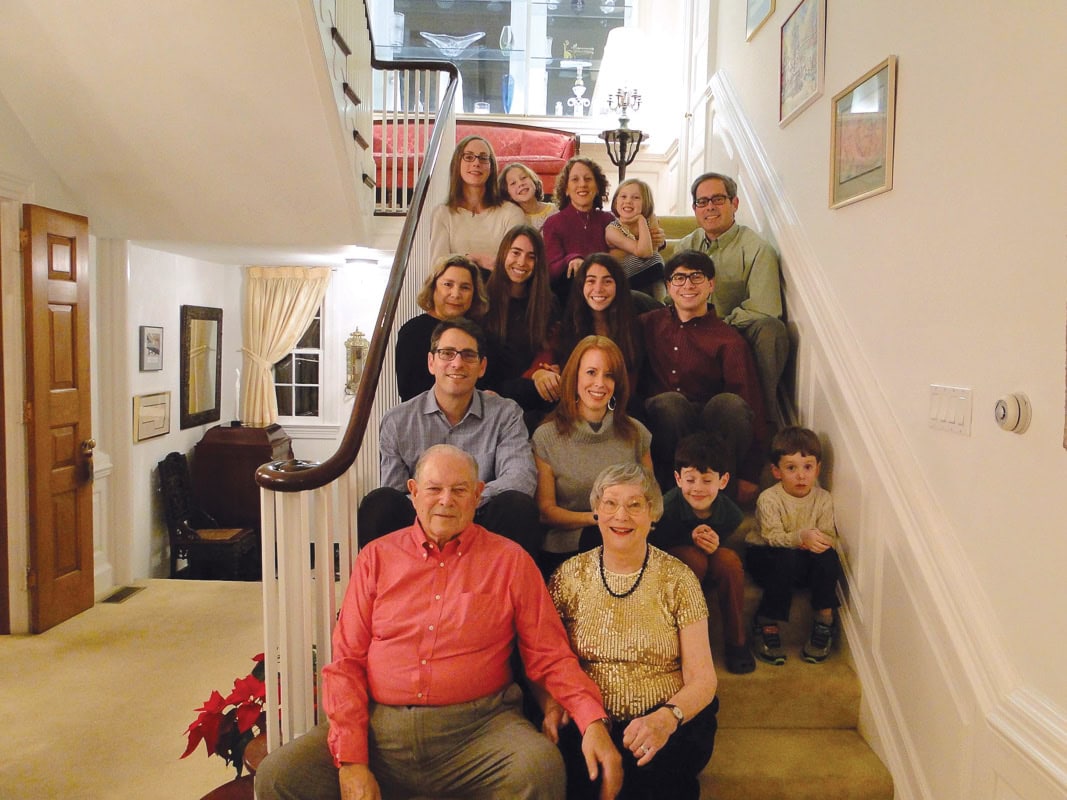
“She saw Judaism as family,” says her son, Erik. “Her goal was always to make sure everyone felt heard.” The mother of three – Brooke, Erik, and Jeff – she was known for hosting family seders and break the fasts that included extended family and friends.
“She took pleasure in seeing her kids and grandchildren build their own Jewish lives,” says Erik.
Through her involvement with the Elizabeth River Project, she participated in oyster-raising efforts from her pier and later delivered them for environmental monitoring. Her grandchildren joined her in this work, and several continued it in their own B’nai Mitzvah and civic projects.
She was, Jeff says, the “rock” of the family, quietly managing logistics, gatherings, and connections.
“I relied on her to do a lot of stuff without realizing all the stuff I relied on her to do. She just did it,” says Erik.
She maintained a meticulously organized system for the family’s annual holiday card, the Cooper Gazette, which reached upwards of 2,500 people each year. Long before digital networks, she built her own, an expansive web of connection sustained through the relationships she carefully tended. In every corner of her life across more than half a century in the Jewish community, the arts, and civic institutions across Tidewater, Cooper practiced her most defining qualities: a relentless curiosity about people and a determination that no one should ever feel forgotten.
“Her small family growing up shaped everything,” Jeff says. “It’s why she built so much community around her.”
Perhaps most powerfully, Cooper lives on in her family by the habits she demonstrated: showing up, staying connected, and believing that community is something you actively create every day.
As her granddaughter Hannah reflects, she was “a once-in-a-generation person.”
Cooper’s impact cannot be contained in a single organization, title, or decade. It lives in the institutions she strengthened, the cultural life she expanded, the Jewish history she preserved, and the thousands of people who received a handwritten note, a remembered detail, or an invitation that made them feel included.
Minette Cooper spent her life making sure people felt remembered. In the process, she created communities that will remember her for generations.
Interested in nominating someone to be recognized as an Outstanding Jewish American in Tidewater? Visit JewishVA.org/TidewaterHeroes or contact Sierra Lautman at SLautman@UJFT.org.