
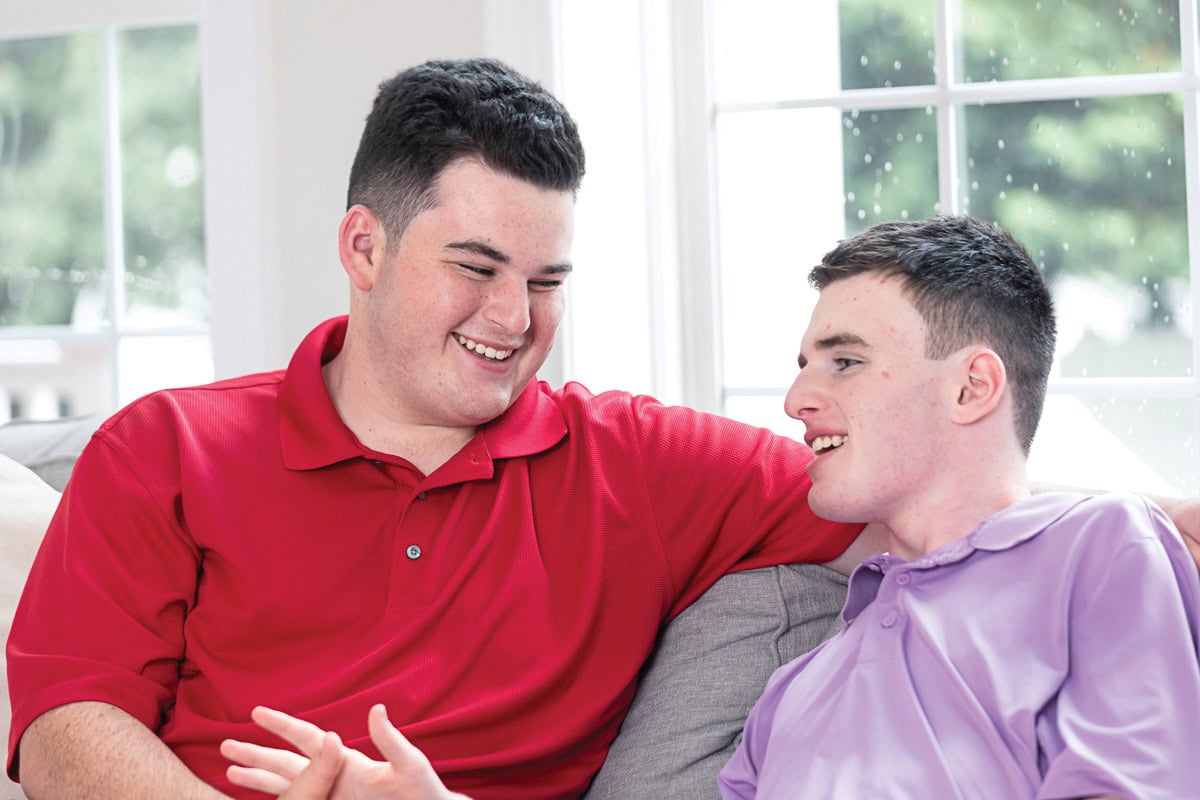
Seventeen-year-old Henry Scolnick has already accomplished what many adults only hope to achieve. As the founder of Ballers Basketball, he has built far more than an adaptive sports league, he has created a community where children with unique abilities, teenage volunteers, and families find friendship, confidence, and belonging. Along the way, he has become a thoughtful leader and mentor whose impact extends well beyond the basketball court.
Six years ago, while still in middle school, Scolnick founded Ballers Basketball after watching his younger brother, Oliver, who has autism, lose opportunities to play organized sports as competition increased. Partnering with Aid Another, he created an adaptive basketball league where children with unique abilities, including those with autism, Down Syndrome, mobility challenges, and other disabilities, could experience the joy of sports in an environment centered on inclusion rather than competition.
Today, Ballers has grown from seven players to 40, pairing each participant with a volunteer buddy who provides one-on-one support throughout the season. For his commitment to building that community, Scolnick is recognized as an Outstanding Jewish American in Tidewater, an initiative of the Konikoff Center for Learning at United Jewish Federation of Tidewater that celebrates local Jewish individuals whose lives exemplify leadership, service, and Jewish values.
This is not his first recognition for creating Ballers Basketball. In 2025, Scolnick was named one of 15 recipients for the Diller Teen Tikkun Olam Award – the youngest recipient in last year’s cohort. He was also named one of the Top 100 Emerging Innovators through the Horn School of Entrepreneurship at University of Delaware.
Now entering his senior year at Cape Henry Collegiate, Scolnick has watched Ballers evolve into something much bigger than he originally imagined.
“What started as a program for my brother and his friends has become something that’s valuable for the whole community,” he says.
That community is built intentionally. Scolnick works to pair players with the same volunteer whenever possible throughout the season, giving friendships time to develop. By the end of each winter, conversations extend well beyond basketball. Buddies catch up on school, favorite foods, and weekend plans.
One pairing particularly stands out to Scolnick. One of his friends volunteered and was matched with a girl who had never played basketball. As her confidence grew each week, so did their relationship. By the season’s end, not only was the player beaming with pride, but her family expressed deep gratitude for the friendship that had formed.
Those relationships often change the volunteers just as much as the players.
Scolnick sees Ballers as an expression of the Jewish value of tikkun olam, repairing the world, not simply by serving children with unique abilities, but by introducing neurotypical teenagers to peers they might otherwise never meet. Many volunteers arrive with little experience interacting with people with disabilities. They leave with new friendships, greater empathy, and a broader understanding of inclusion.
Running Ballers has also transformed Scolnick. Beyond organizing practices and recruiting volunteers, he has learned to navigate setbacks, solve problems, and adapt when plans inevitably change.
“If one day we don’t have enough volunteers, we have to figure it out because these kids depend on us,” he says. “I’ve had to learn how to adapt quickly and keep the program running no matter what.”
Those experiences have reshaped his understanding of leadership. Rather than seeing leadership as being in charge, Scolnick believes it means paying attention, making sure everyone feels welcome, recognizing when someone is struggling, and stepping in before a small challenge becomes a larger one.
That philosophy stems from his relationship with Oliver, whose experiences first inspired Ballers. When asked about his parents’ belief that, as Oliver’s older brother, Scolnick has been the most meaningful intervention in Oliver’s life, Scolnick is both humbled and quick to redirect the focus.
“It’s gratifying,” he says, “but I’m not doing this for the praise. I just wanted him to have the same great childhood and opportunities I had.”
Part of Scolnick’s preparation for next year when he’ll be in college is considering Ballers’ future. He’s already training younger student leaders to take over the program, hoping each generation of volunteers will mentor the next. His goal is to keep Ballers going and for it to remain youth-led, giving high school students the opportunity to grow as leaders while serving others.
Asked what success would look like 20 years from now, Scolnick says he hopes former players and volunteers will look back and realize that Ballers helped shape who they became.
If that happens, he believes the program will have accomplished exactly what he set out to do: create a place where everyone belongs.
Interested in nominating someone to be recognized as an Outstanding Jewish American in Tidewater? Visit JewishVA.org/TidewaterHeroes or contact Sierra Lautman at SLautman@UJFT.org.