
As I’m sure you know, July 4, 2026, just took place, the Semiquincentennial, the 250th anniversary of the signing of the Declaration of Independence on July 4th, 1776. From America’s Block Party in Times Square to fireworks launched from the Golden Gate Bridge, we marked this milestone from sea to shining sea. Among the hot dogs and light shows, at least 264 congregations across the country gathered for multifaith public civil rituals. These congregations, from synagogues to mosques to Bahá’í communities to churches of every denomination, were brought together by faith250.
Founded by Rabbi Michael G. Holzman, faith250 invites us to see this anniversary as an opportunity to “pause, come together, and recommit — across faiths and across differences — to the shared values that sustain our democracy.” For months, local clusters of congregations have come together to study sacred texts; that is, America’s sacred texts, among them the Declaration of Independence and The New Colossus. “This is not an academic exercise,” faith250’s website implores. “It is a moral and spiritual one. As you read and discuss these texts together, you will be asking: What do these words mean to me? What do they mean for our faith communities? What do they mean for us as Americans?”
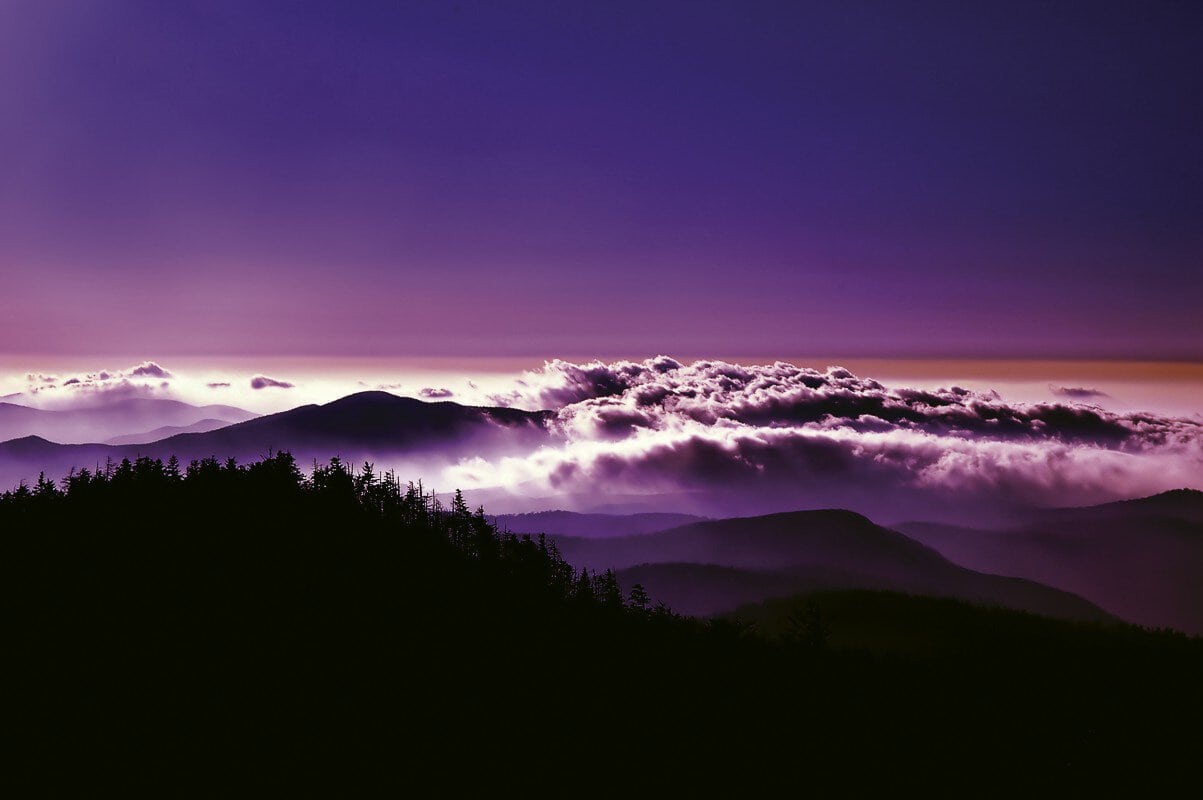
One of the sacred texts identified by faith250 is America the Beautiful. Katherine Lee Bates, an English professor at Wellesley College, wrote the poem in 1893. She was traveling across the country that July, and she was moved by the physical beauty and the potential that she saw around her. Towards the end of her trip, Bates visited the summit of Pikes Peak in Colorado. At the top of the mountain, beneath spacious skies and surrounded by purple mountain majesties, inspiration swelled and the words started coming to her. Bates descended the mountain and wrote the first draft of her poem in her hotel room that evening. Initially published with the title America: A Poem for July 4th, it was revised twice, and by 1911 it was the patriotic song that we all know.
There is so much that is beautiful about America, as Bates writes in her stirring verses. O beautiful, for spacious skies, for amber waves of grain. We need only walk up the hill to the Presidio to see just a fraction of the immense natural beauty of this continent. The amber waves of grain refer to the beauty of the Great Plains, but also to the economic prosperity and potential that all of that farmland represents.
O beautiful, for pilgrim feet. Our nation is a nation of immigrants – over the past 250 years, more than 100 million people have traveled across the wilderness to call America their home. The New York Times just published an interactive map of American ancestry, color-coded based on how people describe their backgrounds to the Census Bureau. The authors write, “There are nearly 200 unique identities represented; blend them – as 340 million Americans do – and we arrive at a jumbled, overlapping, story-filled infinity.”
O beautiful, for heroes proved in liberating strife. Our founding fathers had a vision for a new kind of country, one grounded in democracy and the idea that all men are created equal. That vision has had profound implications for us, changing Jewish history forever. Rabbi Ethan Tucker writes, “America never demanded that Jews purchase equality at the price of their collective identity. For Jews, this country has never been an oppressive empire, nor is it a place that happens to be kind. It has simply been, in a completely unprecedented way, a country in which Jews are full and equal citizens.”
There is so much beauty in America. And, of course, there is so much that is ugly. It can be discordant to sing of America the Beautiful when we face the reality of our country today. There is enormous polarization in America, and deep fissures in our democracy and systems of government. There is hatred of all kinds: racism, sexism, homophobia, xenophobia, antisemitism, and so many more, and sometimes it seems as though the hatred is growing every day. There is so much suffering in our country, and often instead of working to alleviate it, we turn the blame onto those who are suffering themselves.
I could go on and on about all that is ugly in America in 2026. But this ugliness was also present in Katherine Lee Bates’ America of 1893. Her lofty depiction of “America the Beautiful” is not an accurate image of the America of her time. However, Bates was not merely glossing over the ugliness she saw. She was transforming it.
Rabbi Stephanie Kolin of Congregation Beth Elohim in Brooklyn visited Pikes Peak with her family last summer, and she shared her reflections on the site and Bates’ poem with her congregation on Yom Kippur. She writes, “It turns out that Katherine Lee Bates, in addition to being an obviously talented poet, was also a brilliant professor at Wellesley College. And she wrote for many newspapers, including the New York Times, advocating against the unjust treatment of women, the poor, people of color, and immigrants in her day. She was outraged, even activated, by human suffering in her present, but she also had a far-reaching gaze:
O beautiful for patriot dream
That sees beyond the years
Thine alabaster cities gleam
Undimmed by human tears.
This wasn’t a naive utopian account of the America that was. No, she was drawing up the blueprints for the America that could be.”
America the Beautiful isn’t a relic, a song that captures a moment in this country’s history. It is a ballad that is meant to serve as a rallying cry, to call us into action to turn it into reality. The song’s refrain repeats, “America! America!” Rabbi Michael Holzman, the founder of faith250, writes: “Like the angel who called, ‘Abraham, Abraham,’ this song calls to us to wake up, repeating our name twice, and asking us to put down the knife hanging over the future’s neck… The angel may have to shout at us ‘America! America!’… so we can face the choices before us.”
As we commemorate the 250th anniversary of the American experiment, let’s celebrate all that is beautiful in America. I hope we also listen to the rallying cry: America! America! Let’s refocus our sight on what is not currently beautiful in our country today, but what can become beautiful. Then, let’s get to work on those blueprints that Katherine Lee Bates drew up for us.
Rabbi Madeline T. Budman, Congregation Emanu-El, San Francisco, California.