How will the history of the Holocaust be told when the last witness, the last child or grandchild of a survivor has passed away? The records of the Holocaust are preserved in archives throughout the world. And sometimes archives are able to take an active role in memorializing the Holocaust and its victims.
That was the case in October 2020, when a representative of Rosenheim, Germany, contacted Ohef Sholom Temple about a former congregant and Holocaust survivor. He said the city wanted to honor her family and requested documents or photographs of her life in America and the name of any of her relatives. The temple put him in contact with her nephew, and the OST Archives provided the documents.
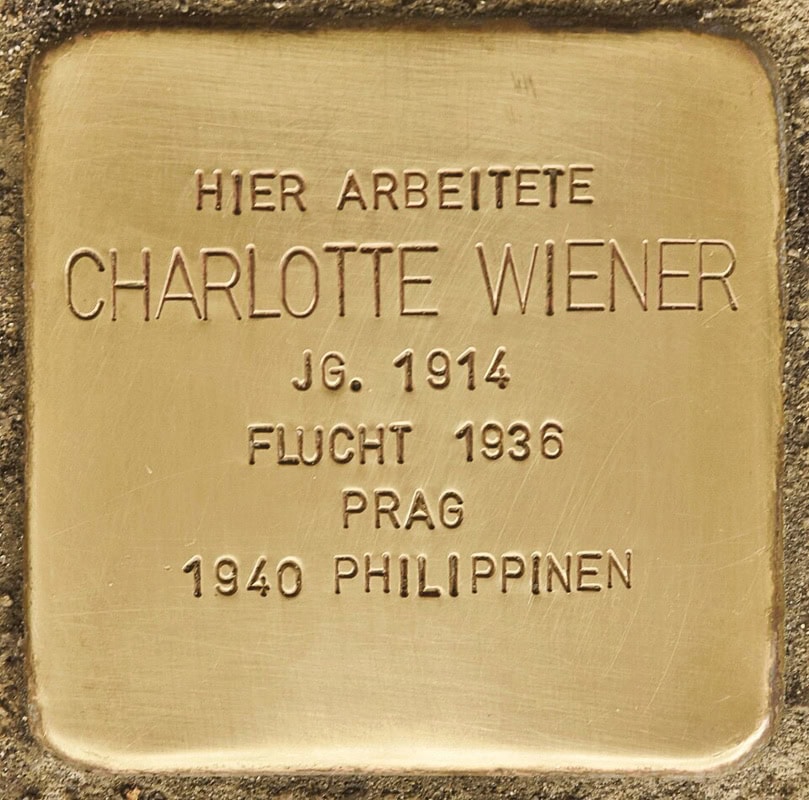
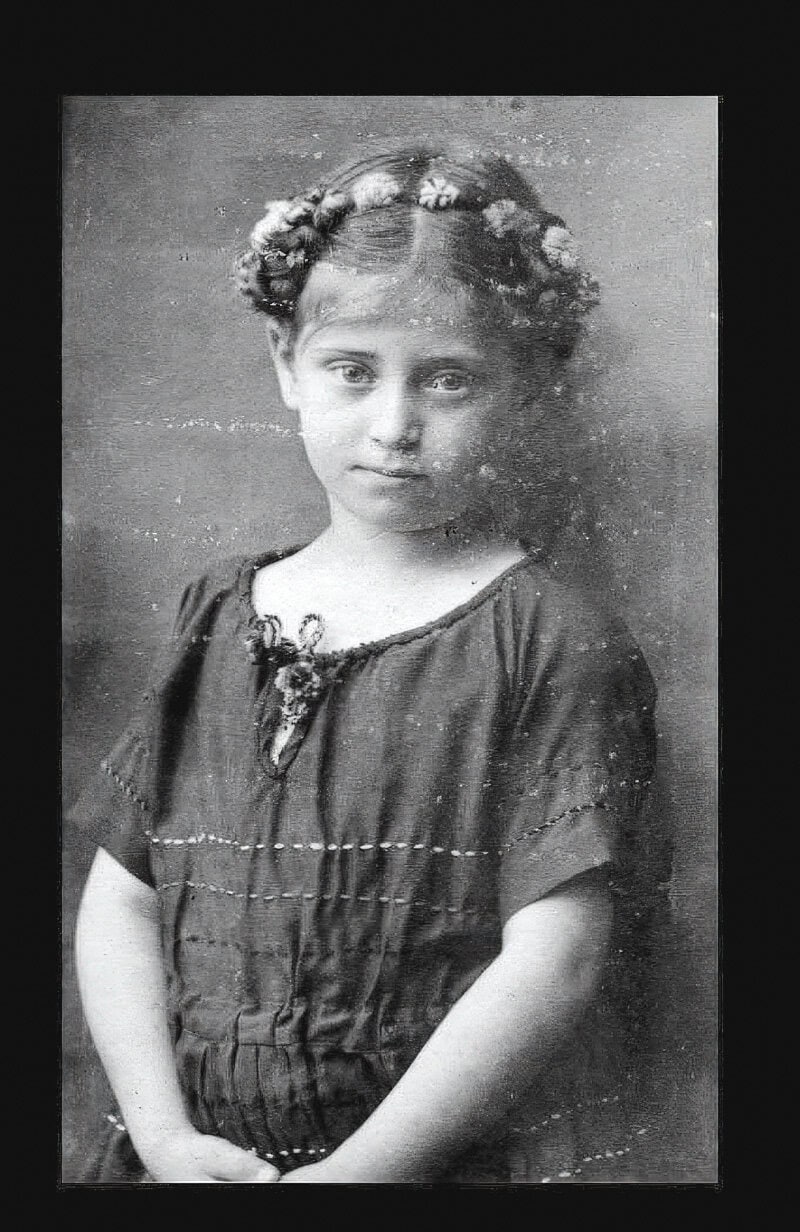
The former congregant was Charlotte Moos. Born in Rosenheim in 1914, she fled to Czechoslovakia in 1936 and the Philippines in 1940. She married another Jewish refugee, and following the Japanese invasion of the Philippines, she became a prisoner of war. Widowed after her husband’s death, she was released at the end of the war and transported to the mainland in a Liberty Ship. Moving to the Washington, D.C. area, she worked for the U.S. government, met and married a fellow Holocaust survivor, and moved to Norfolk, Virginia.
When Adolph Hitler came to power in 1933, Rosenheim was a city of almost 20,000 inhabitants, 38 of whom were Jews. Six years later, on the eve of World War II, only seven remained. Moos’s parents fled in 1938 following Kristallnacht; her half-sister Katharina left in 1939. One couple committed suicide; the others had escaped or were arrested.
Moos’s father, Alexander, had been born in Czechoslovakia, and perhaps that’s why the family sought refuge there. But when the Germans invaded, Moos’s mother, Frieda, was deported to the Zamosc ghetto in Poland and murdered. Alexander was killed in the Majdanek death camp.
However, Moos was one of approximately 1,300 Jews rescued by the Philippines, then a self-governing commonwealth of the United States. The rescue plan was most likely proposed by U.S. High Commissioner Paul McNutt, who got the idea from a friend whose brother worked for a Jewish relief agency. McNutt took the idea to Philippine President Manuel Quezon, and with the help of the Philippine Jewish community, Quezon put the plan into action. The original plan included visas for 10,000 Jews, but the 1941 Japanese attack and occupation of the islands halted all immigration for the remainder of the war.
Moos was interned in a POW camp in Manila, probably the former Santo Tomas University. She would have been surrounded by many other refugees, including the cantor of Manila’s Temple Emil. Initially, conditions were fairly good, but they quickly deteriorated. As a citizen of a Japanese ally, Moos would have been exempt from internment, but the 1935 Nuremberg Laws had revoked the citizenship of all German Jews.
The camp was liberated in February 1945. The war ended in August, and that fall, Moos, recently widowed, left the Philippines and found a new home in Alexandria, Virginia. Her husband, Leo, had been part of a group of 14 Czech civilians who had fought with the U.S. Armed Forces. Captured on Bataan, he endured the infamous Bataan Death March, was transported to Japan on the “Hell Ship” Hokusen Maru, and died in a Japanese POW camp in Fukuoka in April 1945. He’s buried under a Star of David in the American Cemetery and Memorial in Manila.
Living in Alexandria, Charlotte found work as a secretary for the federal government, and in 1950, she married another Holocaust refugee, Henry Moos. He had immigrated to the United States in 1938, sponsored by his father’s first cousin, Albert Einstein. The couple moved to Norfolk, and in 1954, they joined Ohef Sholom Temple. Henry was active in and an officer of the Men’s Club, and Charlotte served on the Sisterhood Board. Charlotte died in 2000 at the age of 85, and Henry died in 2009, aged 96.
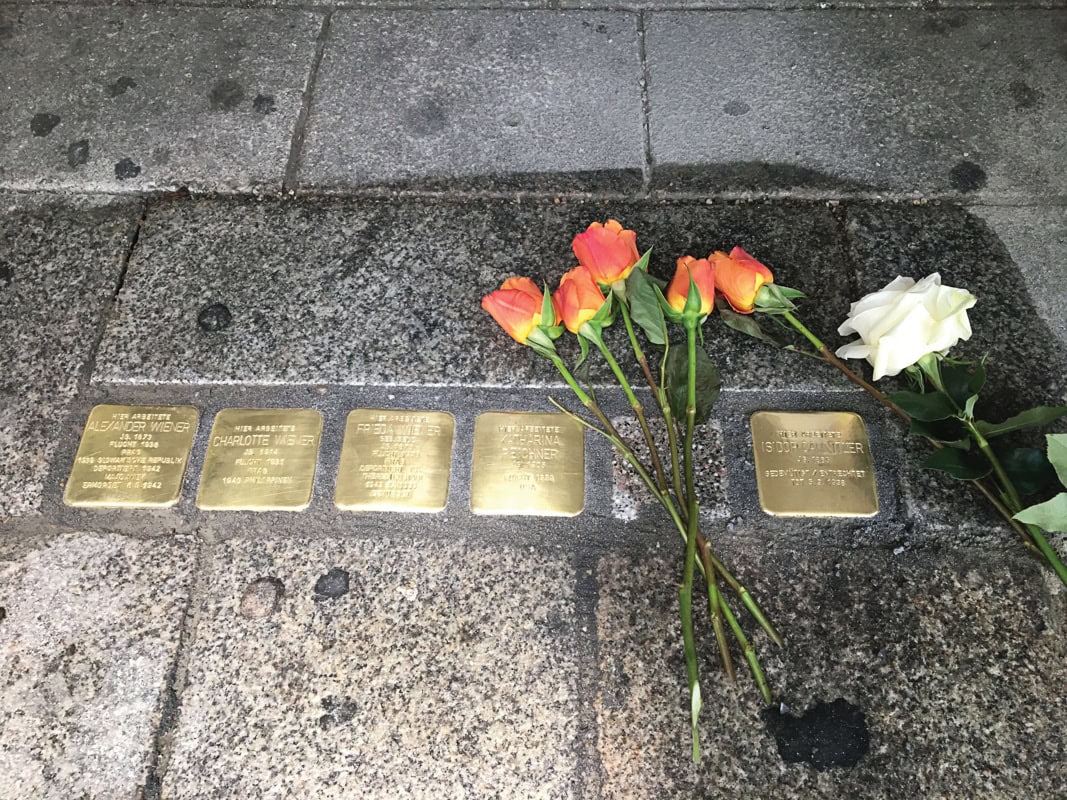
In 2021, the city of Rosenheim memorialized Moos and her family by installing stolpersteine (“stumbling stones”) for them. Each “stone” is a 4” x 4” block, topped by a brass plate engraved with the name, birth date, and fate of the honoree. The blocks are installed in the street where someone victimized by the Nazis lived or worked. The idea was initiated by German artist Gunter Demnig in 1992, and today there are more than 107,000 stolpersteine in 30 countries. In Rosenheim, there are stones for Moos, her parents, and her half-sister, Katharina. Katharina, known here as Kate, and her husband, another Holocaust survivor, had also found refuge in Tidewater. Moos’s story had come full circle; the city she had fled almost 100 years ago is now one of 1,900 municipalities helping to ensure the Holocaust is not forgotten.