Vice Admiral Herman Shelanski, USN (Retired)
I joined the United States Navy in 1980 to protect the very freedoms that allowed me to live and pray as my Jewish ancestors did. Growing up with the heavy knowledge of the Holocaust, hearing on the news the persecution of Soviet Jews in the 1970s, and understanding the millennia of global antisemitism faced by the diaspora, I knew that we as Jews in America were profoundly privileged. I recognized how precious America’s liberties truly were, and I chose to devote 38 years of my life to defending this nation—to giving back through service for all the freedoms it had bestowed upon my family.
I was determined to serve openly as a Jew. I wanted our country to recognize that American Jews stood up and contributed far beyond the realms of science, law, and academia; we were willing to put our lives on the line and pay the ultimate sacrifice in uniform. I never asked for personal recognition or gain. I only wanted to ensure that my service—and the morals and ethics of my Jewish faith that guided it—would be remembered as an undeniable thread in the fabric of our military and our nation.
Realizing for the first time that so many who came before me served bravely but are no longer remembered accurately in their faith sends a chill through me. It leaves me deeply dispirited to think that any Jewish service member could be mistakenly buried under a Latin cross—that being forgotten remains a distinct possibility.
In Judaism, honoring and remembering the dead is one of our most sacred obligations (Chesed shel Emet), yet history has shown it was no longer a certainty. Witnessing the sacred work of Operation Benjamin and its partner initiative, Operation Levi, has completely restored my faith. They ensure that the sacred memory of those who went before me will be faithfully preserved.
A hunch that restored history
History is not preserved by accident; it endures because individuals choose to investigate and set things right. The entire mission began with a simple, unsettling, and paradigm-shifting observation by Operation Benjamin’s co-founder, Rabbi Dr. Jacob J. Schacter. Like me, most Jews who visit the Normandy American Cemetery are deeply inspired by seeing the Stars of David scattered among the graves. Yet, looking across that vast sea of white marble, Rabbi Schacter instinctively did the math. Knowing the true demographics of World War II service members, he realized Jewish soldiers were profoundly underrepresented among the endless rows.
He shared this hunch with his close friend Shalom Lamm—an entrepreneur, cantor, and knowledgeable military historian. Together, they hired a summer intern to comb through military databases and archives. They quickly realized these Jewish heroes were not missing; they were misidentified and buried under Latin crosses. While the exact reasons for each case are lost to time, it is highly likely that many of these World War II soldiers changed their religious designations out of a realistic fear of Nazi capture or hid their faith due to the prevailing antisemitism among their fellow soldiers. Others, despite having the Hebrew mark stamped on their dog tags, were simply misclassified in the frantic, overwhelming rush of battlefield burials.
Their first breakthrough was Private Benjamin Garadetsky, a Jewish GI buried under a cross in Normandy. But Rabbi Schacter and Shalom Lamm quickly discovered that correcting history would not be easy. They had to navigate dense military records to prove definitively
that the soldier was Jewish. Furthermore, to legally change a headstone, the American Battle Monuments Commission (ABMC), the federal agency tasked with overseeing and managing all of America’s foreign military cemeteries, requires the formal consent of the closest living relatives to correct the headstone. And they had to convince and overcome an initial reluctance of the ABMC who had complete authority over all American Cemeteries overseas and was not used to doing this. Schacter and Lamm convinced them that it was not only important to the Jewish community, but the right thing to do. This forced the team to launch extensive genealogical searches to track down living descendants for their signatures—a process that took more than a year and a half. Finally, with the family in attendance, they replaced the Latin cross with a Star of David in Normandy, and Operation Benjamin found its permanent name and its sacred calling. And in this process, they established a great partnership with the leadership of the ABMC and now can expedite the process to a matter of months.
The dead bring the living together
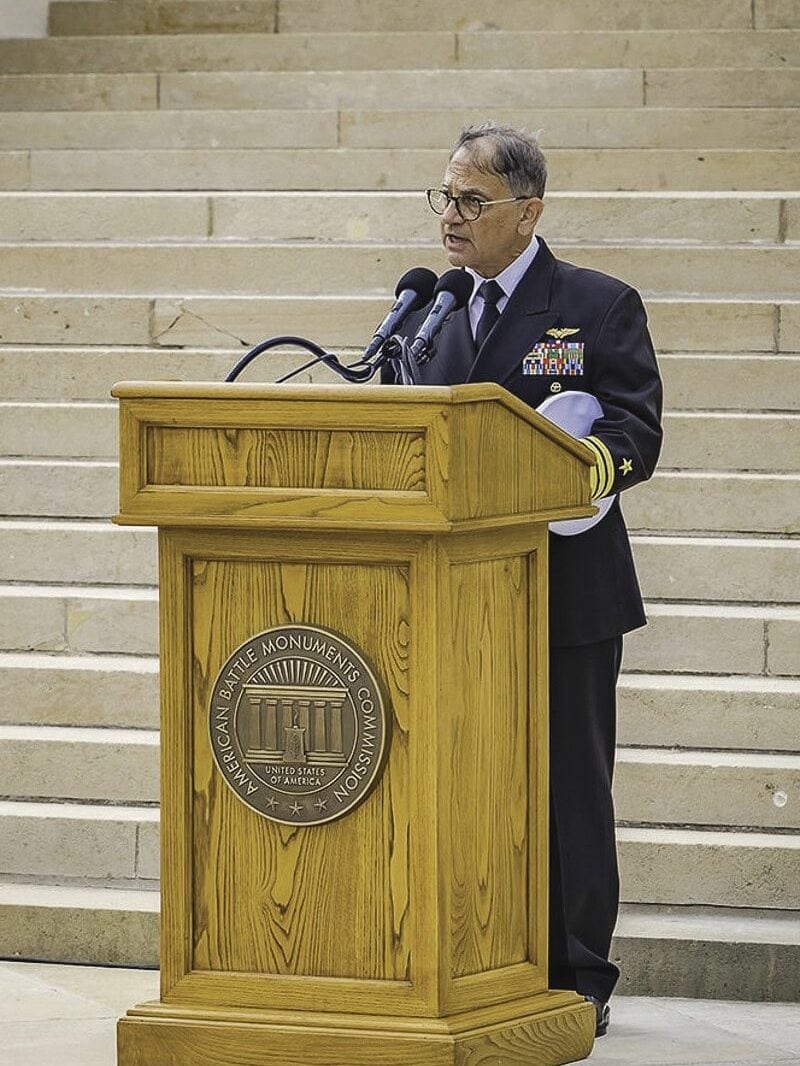
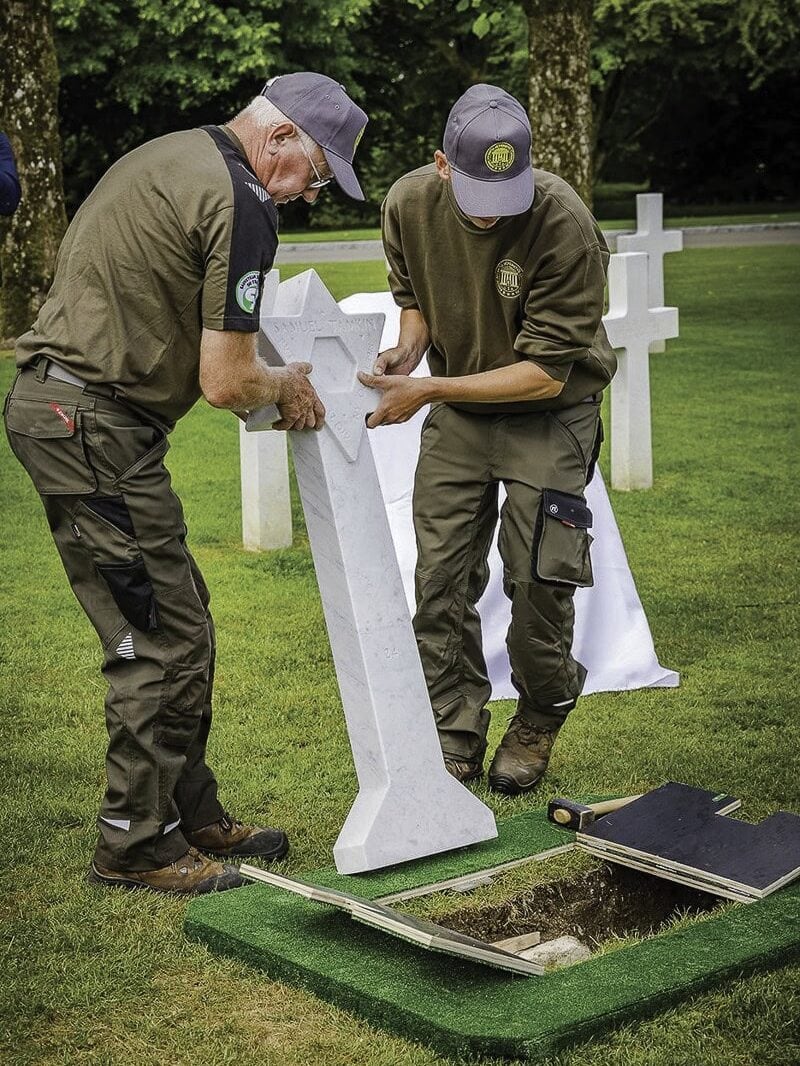
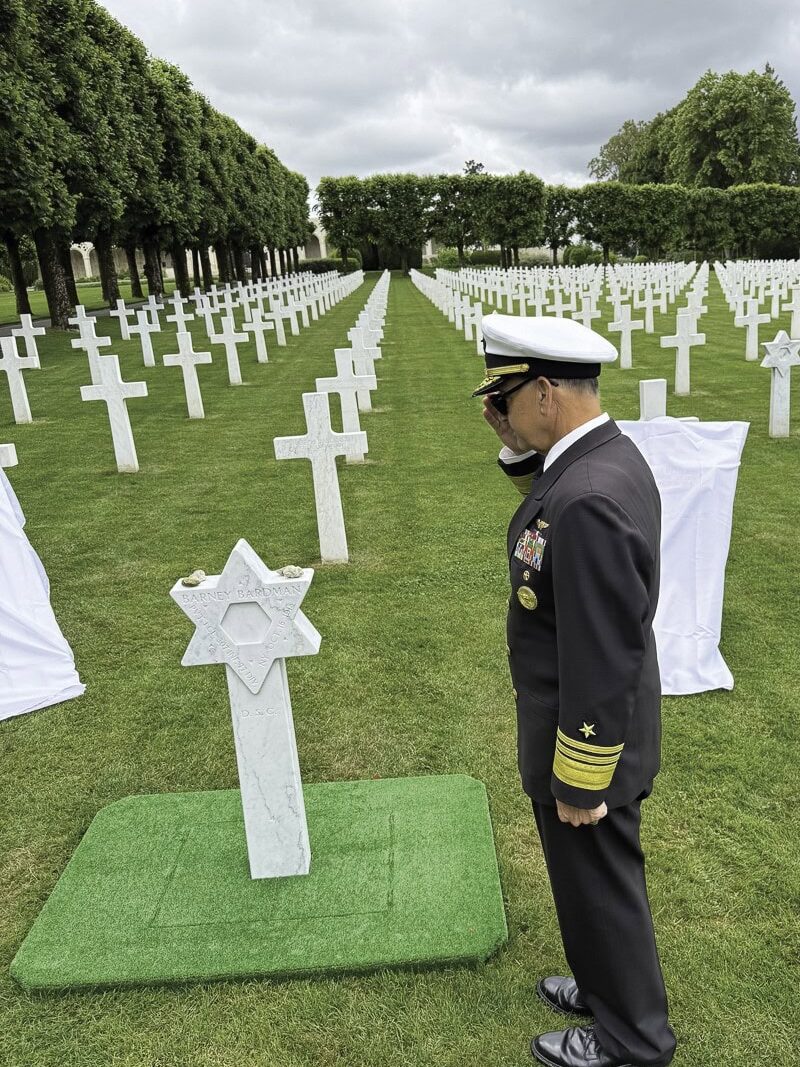
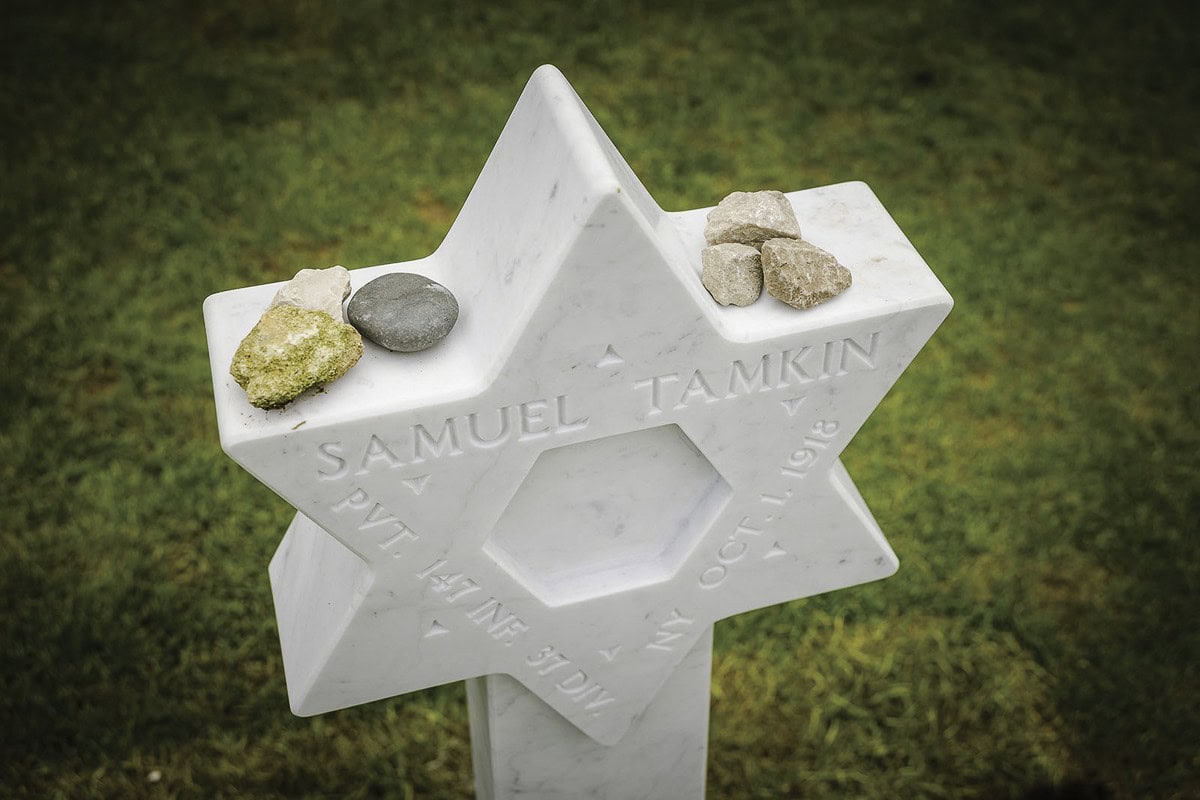
This past June 2, I was invited to take part in an Operation Benjamin ceremony at the Meuse-Argonne American Cemetery in Verdun, France—the site of some of World War I’s bloodiest conflicts. On the first day, we gathered to replace the Latin crosses with Stars of David for five Jewish American heroes: PVT Samuel Tamkin, PFC Barney Bardman, PVT Samuel Backer, PVT Hyman Aronoff, and PFC Maurice Akabas. One can only imagine the immense difficulty of conducting flawless genealogical research on soldiers who died more than a century ago, a testament to the tenacity, rigor, and devotion of Operation Benjamin.
While we were there to honor these fallen soldiers, a profound truth became clear: they were there for us, too.
Through this painstaking genealogical work, families who had no idea of their relation to these soldiers—or that other branches of their family even existed—were brought together, spanning from Israel to the far reaches of the United States.
One such family member was Rabbi Wayne Franklin of Providence, Rhode Island, who received an unexpected, out-ofthe-blue call from Shalom Lamm. Fortunately, the surname Lamm carried historical weight for Rabbi Franklin due to a lineage of prominent rabbinic scholars, so he took the call. Shalom explained that they had discovered a Jewish soldier named Maurice Akabas buried under a Latin cross, and that research proved Rabbi Franklin was the soldier’s great-great-nephew.
Flabbergasted and left speechless, Rabbi Franklin readily accepted Shalom’s invitation to join the delegation in Verdun. He knew he had distant relatives in Texas, where Akabas had enlisted, but his family had long since lost touch with them. Standing in that sacred space, looking upon his ancestor’s gravesite alongside long-lost relatives he was meeting for the very first time, the experience completely revived his family’s sense of strength. It reawakened a deep pride in both their country and their Judaism. Not only were the living giving value to the dead by restoring their Jewish identity, but the dead were giving value to the living by reuniting families and restoring pride.
Day Two: My participation in Operation Levi
On the second day in Verdun, June 3, I had the profound honor of participating in Operation Levi. Inspired by the achievements of Operation Benjamin, while working together to find a U.S. Jewish officer missing in action for 79 years, the Secretary General of the German War Graves Commission, retired German Brigadier General Dirk Backen, had his own “hunch” while visiting a World War I German cemetery and spotting a Latin cross marked with the name Levi.
His investigation confirmed that Private Meyer Levi was indeed a Jewish German soldier who had been mistakenly buried under a Christian symbol. Recognizing that remembrance transcends nationality, General Backen contacted Shalom Lamm, inspiring a sister initiative named in Private Levi’s honor. The Operation Benjamin and Operation Levi genealogy and history teams now work hand in hand to find these soldiers and correct the history. It is an amazing collaboration.
To witness this ceremony was deeply moving. As Jews, our memories of Germany are overwhelmingly dominated by the horrors of Nazism and the cataclysm of the Holocaust. Yet today, their modern war graves commission is doing breathtaking, sacred work to restore the identities of Jewish German servicemen of World War I—men whose heritage and headstones had been systematically targeted and erased by the Nazi regime during the occupation of France. By actively tracking down these forgotten graves and replacing the crosses with Stars of David, they are confronting their history with absolute moral clarity. It was a privilege to see Operation Benjamin recognize General Backen by presenting him with the first-ever Order of the Marble Star of David for his courageous leadership.
A final salute
Standing there over those two days, a rush of profound emotions filled my mind. I saw that the Meuse-Argonne cemetery is meticulously maintained to extend the ultimate respect to the fallen. Inscribed on its chapel wall are these remarkable words: “This chapel is erected by the United States of America as a sacred promise of a grateful people with its immortal dead.” This transforms a burial ground into a living legacy.
During the ceremonies, Rabbi Schacter offered a blessing, the families spoke, and Kaddish was recited. Attendees watched with damp eyes as workers carefully removed the white marble crosses, wrapped them in white cloth, and replaced them with the symbol of Judaism. These crosses were not cast aside in anger; they had guarded these men with dignity for more than a century, and we bid them a respectful farewell.
As the new Stars of David were unveiled, I added my own slow salute to each soldier. To stand there as a veteran, a Jew, in uniform, and a witness was an indescribable honor.
How we bury our dead reflects how we value life. Thanks to the shared sacred work of Operation Benjamin and Operation Levi, heroes on both sides of a global conflict are finally memorialized accurately. In restoring their identity, they restored a piece of ourselves, proving that the bonds of family, faith, and country can never be broken.
Postlude
Joining us for the ceremonies was my friend Michael Oren—former Israeli Ambassador to the United States, Knesset member, acclaimed author, and historian. Michael’s own father fought bravely in World War II during the famous Battle of the Bulge, giving him a deep personal connection to this sacred ground. Together, we reflected on how much the 250th anniversary of America means to the world—a milestone mirrored in the diverse men and women who made the ultimate sacrifice and lie buried across Europe, as well as those still actively serving our nation today.
We talked in awe of those early Jewish soldiers who took up arms not long after arriving on American shores, stepping forward despite the prominent domestic antisemitism of the era. They understood the vital importance of Jewish Americans fighting for national security. This enduring legacy of America’s global perception at 250 years is still critical to the State of Israel and the historical ties—both democratic and military—that have bound our two nations together through the centuries. It is a critical dialogue that must be heard and continued.
To learn more or support legislative efforts such as the Fallen Service members Religious Heritage Restoration Act, visit www.operationbenjamin.org.