
A visit to the Simon Family JCC inspires.
During the Thanksgiving holiday, I visited the Simon Family Jewish Community Center of Tidewater (the JCC), a place I had visited before, but never truly experienced as it was meant to be lived. My earlier encounter had been during the COVID-19 pandemic, when Jewish spaces, like so many others, felt provisional and restrained: masked, socially distanced, outdoors, muted and careful. This time was different. The building was open, alive and rooted again in the steady rhythms of communal life.
And what I saw inside offered both beauty and quiet instruction.
There was much to admire: a thoughtful space designed for human presence, a K–5 school alive with children’s voices, a room honoring the
Shoah, an Israeli flag flying with confidence. It was a place that carried history and purpose without spectacle, continuity without self conscious display.
But what stayed with me most was not architectural or ceremonial.
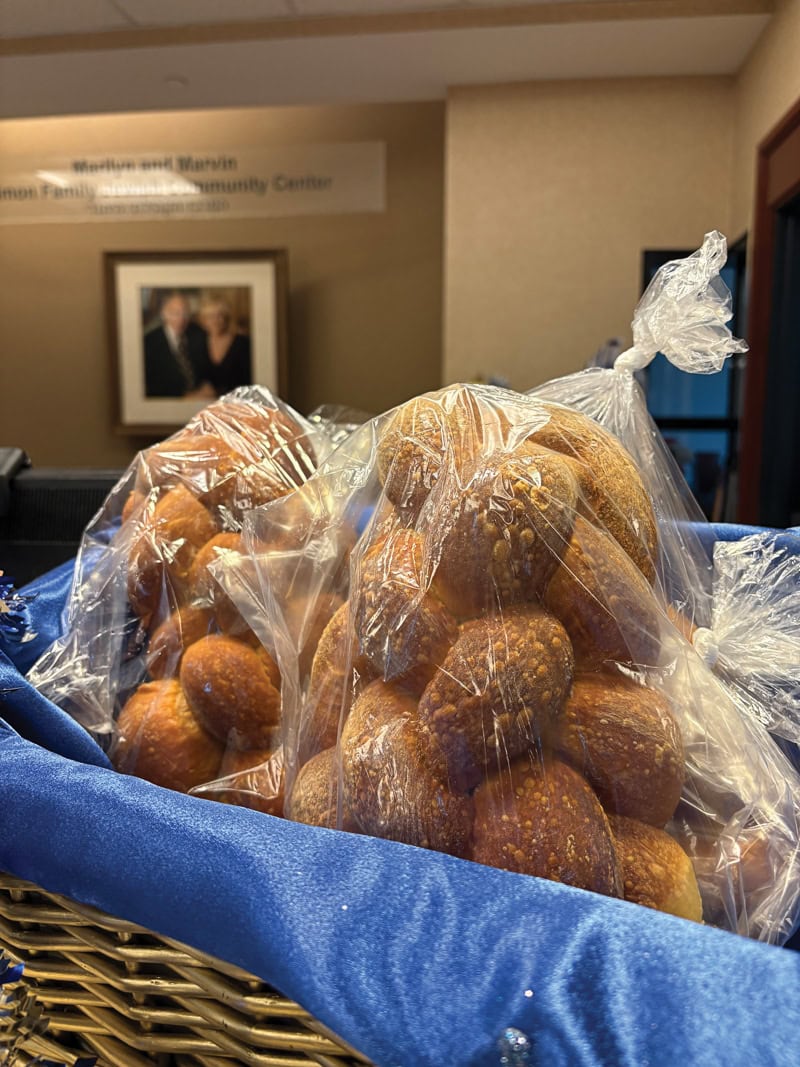
What moved me was a simple basket near the entrance, filled with challahs for Shabbat and made available to all. A simple sign said, “Fresh Challah.” No explanation.
No campaign language. Just challah, resting there quietly, offered without fanfare or qualification.
It was a small gesture, and yet it contained a world.
We spend enormous time debating the future of Jewish life—continuity, affiliation, belonging, identity. There are reports, strategies, task forces, demographic studies. Much of this work is well intentioned, even essential.
But standing there, looking at that basket, it was hard not to feel that something far simpler was quietly doing more.
That challah was not merely bread. It was rhythm, memory and care braided into form: the inheritance of Friday afternoons and family tables. It represented nourishment and connection, linking memory and presence.
I was reminded of something I once wrote: Bread is one of Judaism’s oldest civic technologies. It binds memory to practice, heritage to the week’s rhythms. It is how the ordinary becomes sacred without spectacle. Seeing that basket felt like the lived version of that argument—a small, steady act carrying centuries of meaning.
To place challah at the threshold of a Jewish community center is to communicate something elemental: You are not entering a bureaucracy.
You are entering a home. You are not first evaluated. You are first welcomed.
There is a moral confidence embedded in that choice. It’s something that is\ rare today, when institutions often operate out of caution, when belonging can feel conditional and kindness procedural. Even communal life can feel fraught or transactional.
This basket assumed none of that. It extended care before expectation. It trusted rather than tested.
Judaism has always understood that holiness lives not only in text or ritual, but also in the sanctification of everyday life. Bread becomes blessing. Ordinary space becomes sanctuary. Hospitality becomes covenant.
We speak of chesed, lovingkindness, as if it were abstract. Here it was embodied: tangible, quiet, present. No sermon. No explanation. Just an instinctive expression of what Jewish life knows how to do when it remembers itself.