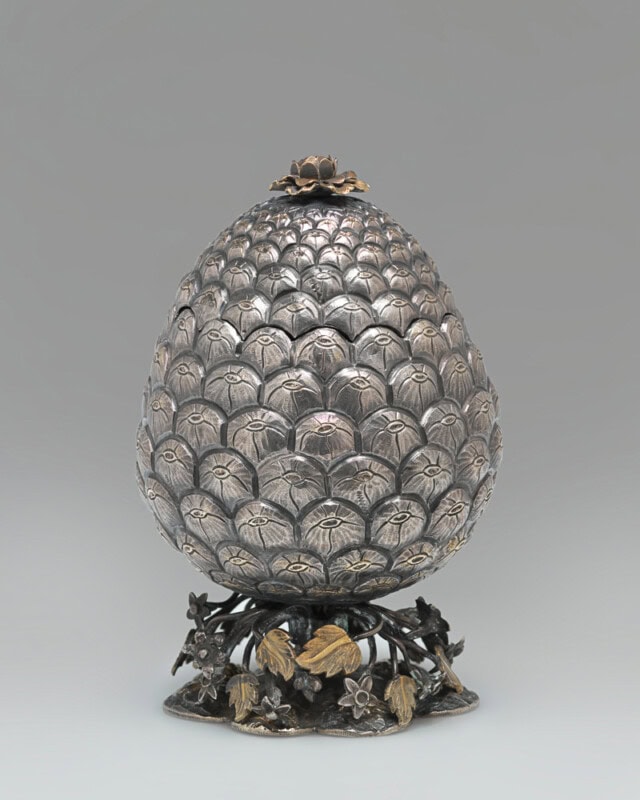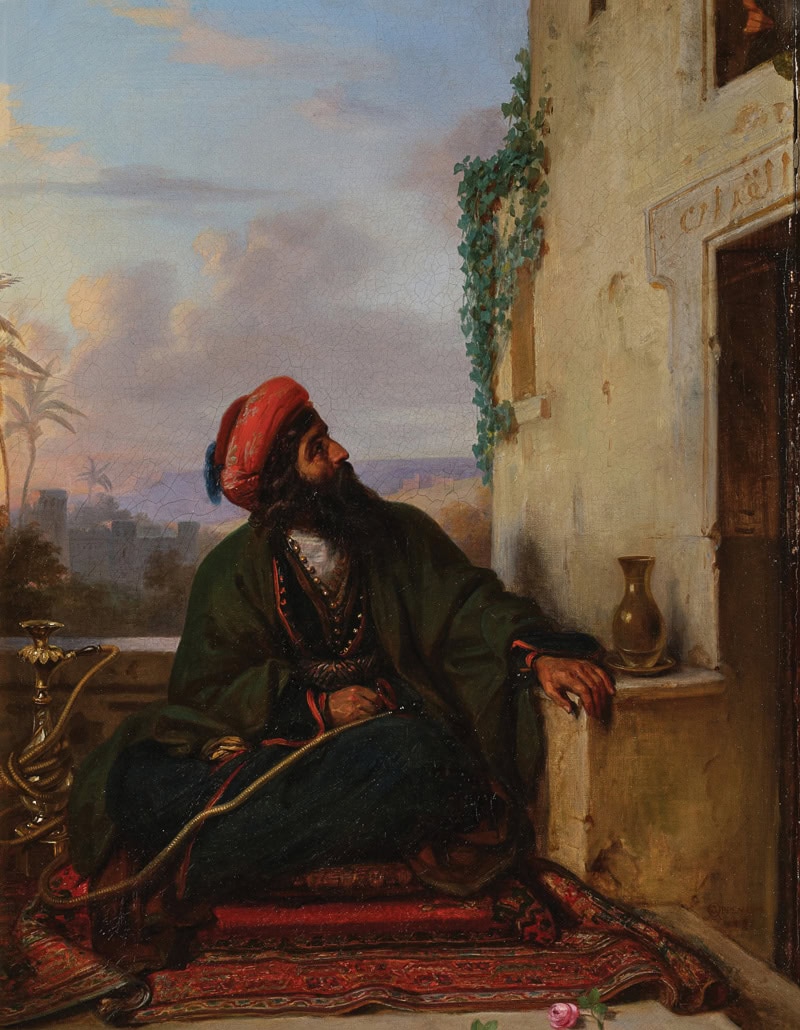
A collector of Judaica and a lifelong Norfolk resident, Clay Barr has launched an initiative with Chrysler Museum of Art to cultivate a permanent Judaica collection at the museum.
When asked why a Judaica collection is important to the Chrysler Museum at this moment, Erik Neil, the Macon and Joan Brock director at Chrysler Museum of Art, says, “It’s not necessarily ‘this moment,’ but we have a lender who catalyzed our collecting initiatives, a curator with an interest and a background in this field, and an opportunity to collect integral works that represent the large and important Jewish community.” Neil explains that the museum is a broad collecting institution that seeks to represent cultures across time and geographical locations to connect with its audiences.
“We’ve acknowledged we have a gap to fill in our collection. With the support of donors like Clay Barr and others in the Jewish community, the excitement has been growing for this initiative to have its culture and history represented here.” A challenge grant to raise funds for this effort will close at the end of this year.
Barr’s interest in Judaica dates back more than 30 years, when she memorialized her late husband, Jay, with an extensive collection of torah pointers, or yads. When Barr began her collection, only two museums in the United States had a Judaica collection, one in North Carolina and another in Minnesota. With a small but devoted Jewish population in Tidewater, Barr felt strongly that the Chrysler should have a permanent collection of its own.
Last January, Chrysler welcomed Mia Laufer, Ph.D. as the new Irene Leache Curator of European Art. According to the museum’s website, Laufer “oversees the research, interpretation, display, and stewardship of the museum’s collection of European art before 1945.” Under her direction, the museum will embark on furthering its collection of Jewish-related art and artifacts.
Jewish News asked Laufer about her expertise and vision in securing these new acquisitions for a permanent Judaica collection at the Chrysler.
Jewish News: Share a little bit about yourself and your background and when and why you joined Chrysler Museum’s team?
Mia Laufer: I’m originally from Brooklyn, but I’ve moved around a lot in the last 15 years for graduate school and work opportunities. I’m a specialist in 19th and early 20th century art, and I’ve worked on several projects with Jewish themes over the years (including a dissertation on Jewish collectors of Impressionism). Most recently, I worked as a curator at the Des Moines Art Center in Iowa. I moved to Norfolk in January 2025 to join the Chrysler Museum team. I was really impressed by the Museum’s collection and the staff’s dedication to building on that foundation to tell more complicated and diverse stories about art and culture.
JN: Chrysler already owns Judaica. How do you foresee the acquisitions from this fundraising initiative expanding the museum’s current ownership of Judaica?
ML: Right now, the Chrysler Museum has a small (but growing!) collection of Judaica, and several of those artworks are already on view. But it isn’t large enough to have a strong presence in our galleries. Jewish traditions have been practiced for millennia and on at least six continents, but our collection doesn’t reflect that scale or diversity. Ideally, this fundraising initiative would lead to acquisitions across the Museum’s collection. As the European art curator, I want the Museum’s collection to reflect the vibrancy of Jewish communities across Europe, from pre-Inquisition Iberia to 17th-century Netherlands, from shtetls in the Pale of Settlement to artist enclaves
in Paris.
JN: How do you determine what to purchase? Is there anything significant you’re hoping to acquire as part of the new Judaica collection?
ML: We have a list of specific kinds of Judaica we’re especially interested in adding to the collection. For example, one of our top priorities is to acquire European Judaica from ca. 1400-1550. (Right now, the earliest work of Judaica in the collection is from ca. 1750.) I think it would be powerful to display a work like that as an introduction to the European art galleries in conversation with Christian and Islamic art objects from the same era. That way, Museum visitors are introduced to European art through the lens of religious diversity.
JN: Aside from acquisitions, you mentioned partnerships with other museums who might loan pieces to Chrysler. Could you please share how these relationships would benefit our local museum?
ML: Building the Chrysler Museum’s Judaica collection will take time as we wait for the right objects to become available. In the meantime, I’ve been working with a colleague at another museum to arrange some long-term loans. The plan is to borrow artworks for a year or two, allowing Jewish art and culture to have a more visible presence in the Chrysler Museum’s galleries while we take our time to locate and acquire artworks that are the best fit for the Museum’s collection.
JN: If members of the local Jewish community own historical pieces, would you be interested in looking at their collections for possible inclusion in the exhibit?
ML: Another way the local Jewish community can contribute is to consider donating Judaica from their own collection. What we’re looking for is very specific, but if you have Judaica you’d like to donate, please reach out via artdonations@chrysler.org.
JN: Anything else you’d like to share with the readers of Jewish News?
ML: We’re interested in acquiring Judaica in a broad sense. This could include art, ritual objects, rare books, manuscripts, and other items of the past and present related to Jewish culture, religion, and traditions.