
On the morning of Sept. 11, 2001, David Ashe was at home in Virginia Beach watching the Today Show while on terminal leave from the Marine Corps.
He had recently completed his first active-duty tour and was stationed in San Diego. At the moment, however, Ashe was at home visiting his parents, Marilyn and Mike Ashe. His leave was scheduled to end Sept. 15.
When the television cut to live coverage of a fire at the World Trade Center, he called his roommate in San Diego.
“Sorry to wake you up, but there is some news,” he told him. He asked his roommate to turn on a news station, and as he did the second plane struck the second tower.
Like millions of Americans, Ashe spent the next day glued to the television. At one point, he saw a brief clip of a volunteer searching through the debris of the collapsed towers. Then he began hearing about the bucket brigades – lines of people passing debris hand-to-hand through the wreckage.
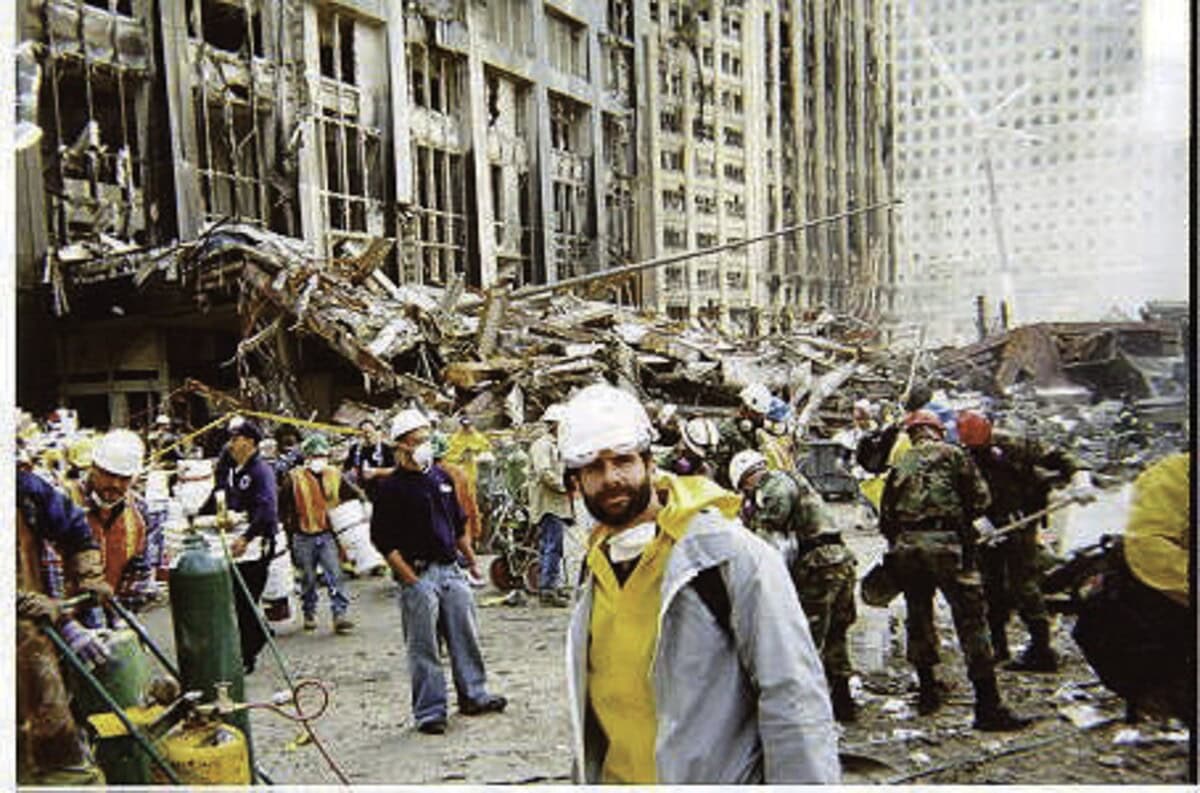
The images stayed with him until he decided he needed to be a part of the efforts. By 4 am on Thursday, Sept. 13, he had left a note for his parents and was on the road, driving north to New York.
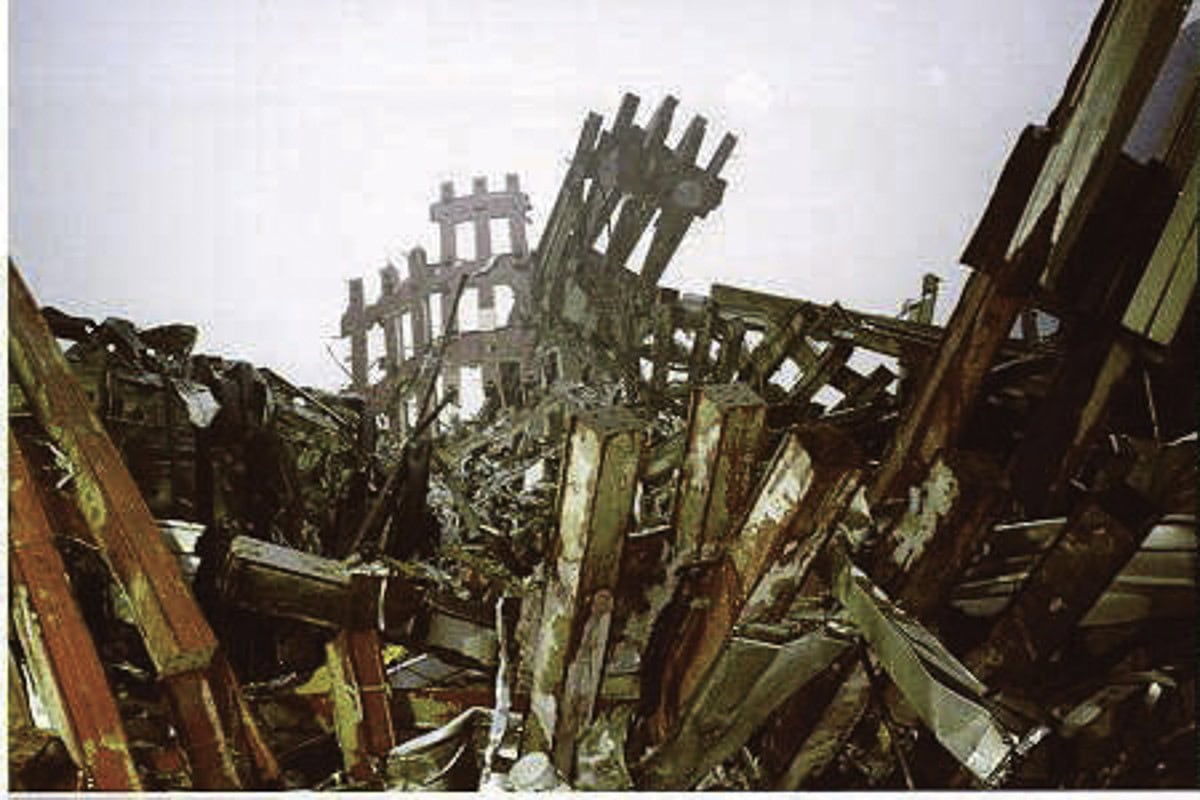
When he arrived at Ground Zero, the scene was unlike anything he had imagined. “It was very loud,” he recalls. “Generators, steam, people, vehicles, dozens of cranes.”
The rubble pile rose from street level in places to roughly 75 feet high. Steel beams that formed the basic framework of the towers – massive pieces of solid steel, roughly a foot square – had been twisted and bent, like copper wire. And then there was the smell.
“The entire area smelled like someone lit a stack of newspaper and doused it with formaldehyde.”
At times, he could see glowing red steel deep inside the pile. Flames remained visible in nearby buildings and in portions of the rubble that rescuers could not reach.
Standing on Church Street, about 25 feet from where one of the towers had just been, he looked at the remains. The buildings had fallen “cleanly and eerily on top of themselves.”
But the scale of destruction was not of concern at this point – Ashe, and many other volunteers, were thinking about the possibility that someone might still be alive amongst the rubble.
“It truly felt like SAR,” he says, referring to search and rescue. “We all had that urgency.” Ultimately, though, the group discovered human remains, and calls moved down the line for medical personnel to come take control.
“It felt very sudden and sad and it temporarily sapped us,” he says. “I had truly thought we were going to find people we could help.”
The mission continued, though, as the nature of the work became clearer. Ashe points to his Jewish background as the driving force behind his determination to help, no matter how grim the situation turned out to be.
“Jews ignore religion and ignore danger when help is needed,” he says. “We take action and we care for others. That’s the mindset of Judaism.” And the threat of danger was imminent.
Three blasts from a horn meant falling debris was coming and everyone should take cover. At first, people tried to move when they heard the signal. But the debris was so extensive and movement through the site so slow that they quickly realized there was often nowhere to run.
In one instance, Ashe says he heard a sound like a cannon – which he later identified to be a large piece of glass falling from one of the buildings near the Millennium Hilton. The sound startled everyone, and then the three horn blasts came.
Nobody moved or spoke; instead, they just looked at one another and waited.
“We seemed to communicate that we were ready to help if anyone was hit by something,” Ashe says.
That said, the lasting memory of those days for Ashe isn’t pain, but gratitude. The work at Ground Zero was dark and sad. Volunteers came face to face with death, destruction and danger at a scale few people can comprehend – but in spite of it, he was just grateful to be there.
“I think every person in America wanted to take some tangible action,” he says. “And I was fortunate to have that opportunity.”