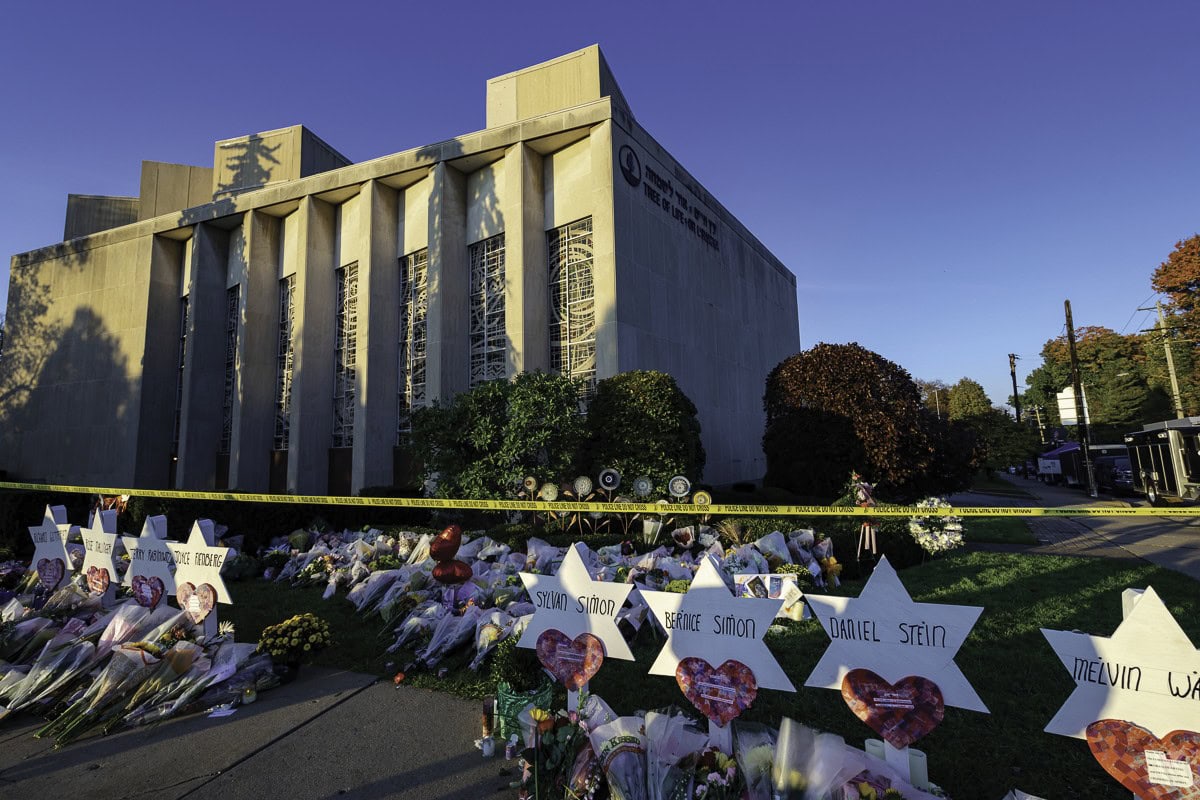
In 2018, a gunman killed 11 worshippers at the Tree of Life synagogue in Pittsburgh, the deadliest attack on the Jewish community in U.S. history.
In the years since, some Jewish writers have argued that congregants should be able to protect themselves. Rabbi Stuart Halpern and Tevi Troy wrote in City Journal in 2022 that many Jews concluded the only ones who can defend them are themselves.
Laws barring licensed carriers from houses of worship, they argued, leave would-be victims disarmed while attackers stay armed. “A siddur, alas, is a poor substitute for a gun in a firefight,” they wrote.
Still, Virginia law makes it a misdemeanor to carry a gun into a place of worship during a religious meeting without “good and sufficient reason,” a phrase the statute doesn’t define. Lawmakers have attempted to loosen the law. A 2019 bill to allow weapons in places of worship passed the state Senate 21-19, but died in the House Rules Committee.
Ohef Sholom Temple is one of the congregations that has chosen the stricter approach. The synagogue has armed security on site, but congregants – or anyone entering the building – are not allowed to carry their own firearms.
“The issue of security is a basic in synagogue life,” says Jennifer Levin-Tavares, the temple’s executive director. She has spent more than 25 years in synagogue management, and several of those years put her close to some of the nation’s worst tragedies, including the 2018 shooting at Marjory Stoneman Douglas High School, one mile from the synagogue she served in Parkland, Florida.
Throughout her career, balancing security with the air of warmth that worshippers crave from a synagogue has never been easy. “It is a tricky balance,” she says, “one that constantly evolves.”
Security consultant Joe Bouchard started working with Ohef Sholom in 2017 to help overhaul its security policies and procedures. Levin-Tavares is in regular contact with Bouchard, as well as with Mike Goldsmith, Secure Community Network regional advisor, and the Norfolk Police.
The Secure Community Network, which advises Jewish institutions on security, recommends a layered approach that includes hiring off-duty police officers for armed security, says Goldsmith. Synagogues that choose to use armed volunteers should have strict policies, vetting, and rigorous training, he says, and should distinguish between a formal security team and an individual allowed to carry concealed.
Coordination with police is essential, he says, because in the event of an emergency “first responders will not know who is on your security team.”
The temple has hosted full-scale exercises for Hampton Roads law enforcement, most recently through Goldsmith’s coordination. Protocols are re-evaluated after significant antisemitic or security incidents and before major events, and congregants are told about changes, such as those around the High Holidays.
“We don’t want Ohef Sholom to feel like a fortress,” Levin-Tavares says. Access control and layered security are key, but “the warmth largely comes from the people, how we treat each other, and being strategic in approach.”
Synagogues face the challenge to be safe, secure, welcoming, and legal