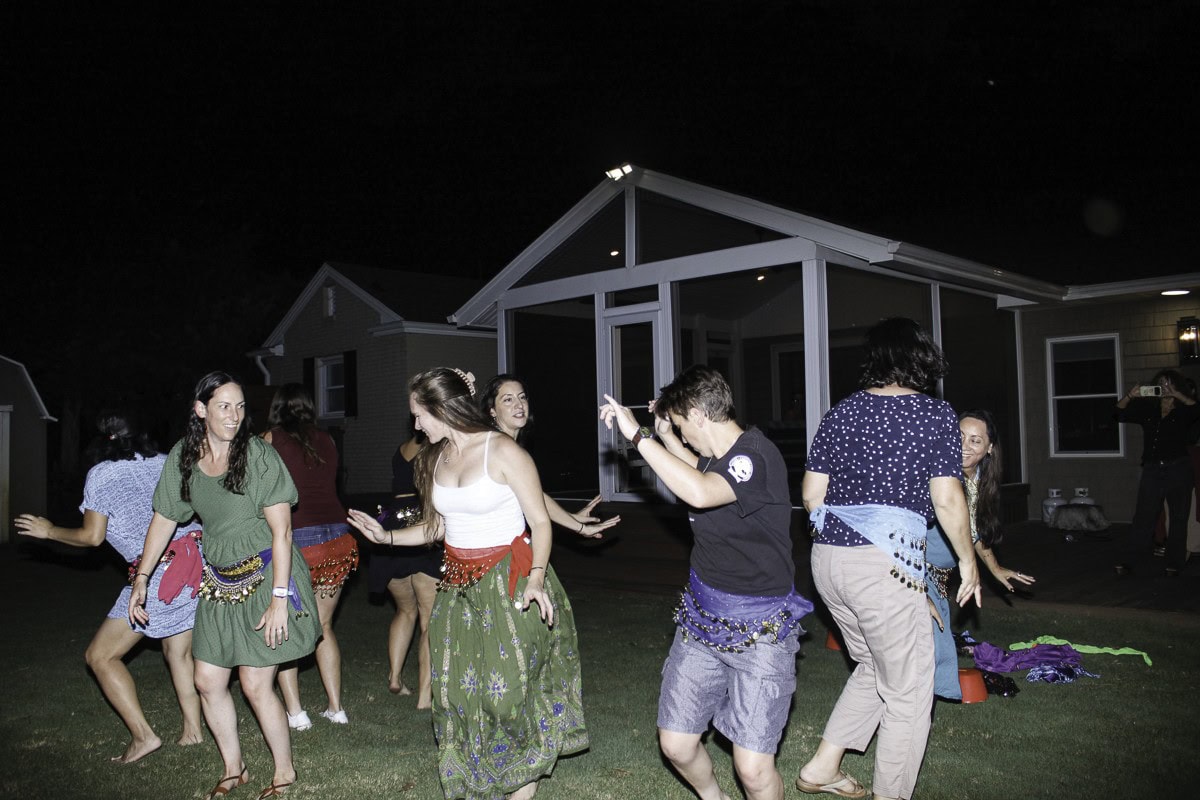
Two dozen or so women gathered to immerse themselves in Mizrahi culture on the evening of Sunday, August 23. The event was led by Jackie Dratch, creator of the Mizrahi Dance Archive, and organized by NextGen757, a community group for young Jewish adults ages 21 – 45.
“This is a women-focused event because there’s so many traditions of women doing exactly this, of gathering together, doing henna, and dancing,” Dratch says.
Held at a home in Virginia Beach, the evening kicked off with a helping of Mediterranean staples — falafel, schnitzel, salad, hummus, and Za’atar fries.
Then, Dratch sat everyone down for a brief presentation. She touched on the migration patterns of Mizrahi Jews, referring to them as ‘the Jews that never left the Middle East’ speaking about their spiritual, ritualistic uses of dance and henna.
Dratch grew up in Queens, N.Y. with her Israeli/Mizrahi family. She was also immersed in vibrant mixing pot of Jewish cultures from all parts of the Middle East, North Africa, and Central Asia. In her presentation, she shared tidbits from all the traditions she has witnessed, from the extravagant, lively weddings of Bukharian Jews to the upbeat dance traditions of Egyptian Jews.”
As Dratch says, “there’s not one way to be Jewish, not one way to look Jewish.” In America, she says, most Jews come from Ashkenazi backgrounds. “We just don’t see this part of Judaism as much. But when you go to Israel, it’s everywhere, like in the fabric of the whole culture.”
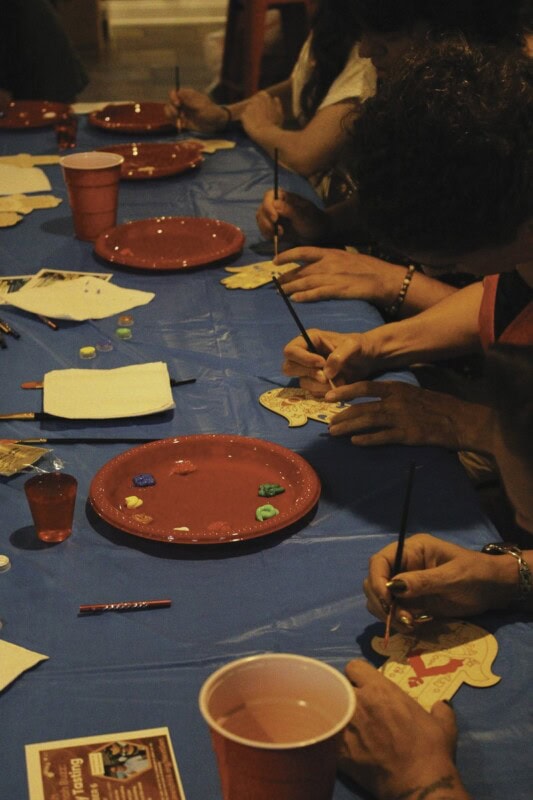
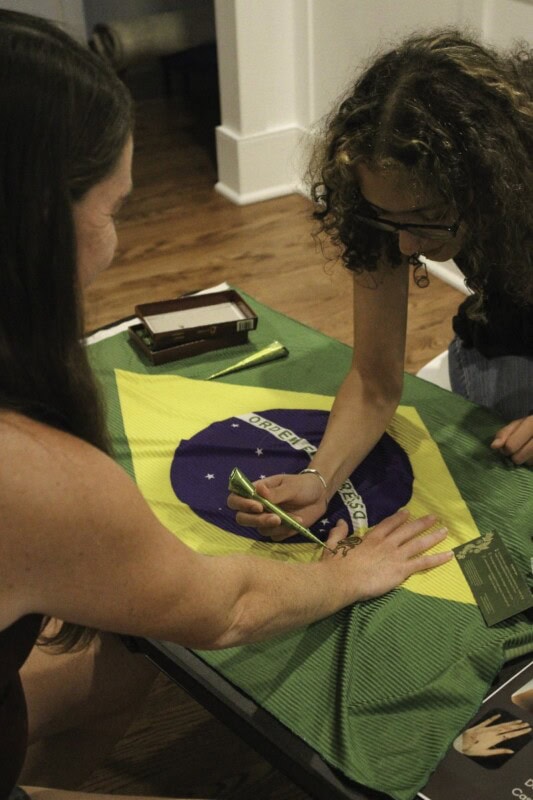
Next, participants painted wooden Hamsa door decorations while waiting to get henna done – chatting and sharing anecdotes of all kinds, from raising children to moving to new cities to their respective jobs.
Though many dance and henna traditions are reserved for the bride on her wedding day, Dratch says there are also plenty of examples of rituals being held just for the fun of it. Special women’s celebrations such as Chag Habanot, or festival of daughters, a North African women’s Hanukkah celebration, or Leil Purim, a Kurdish Jewish women’s gathering the night before Purim, have the same common thread: bringing generations of Jewish women together to sing, dance, adorn themselves with henna, and celebrate womanhood.
Growing up, Dratch’s best friends were three Jewish Egyptian sisters, and belly dance was a common activity.
“Their mom would just take out some hip scarves and start making us dance,” she recalls. Just two weeks before this event, she performed at one of the sisters’ weddings in Philadelphia – a full-circle moment, she says, that made it “very special to relive those memories, 30 years later.”
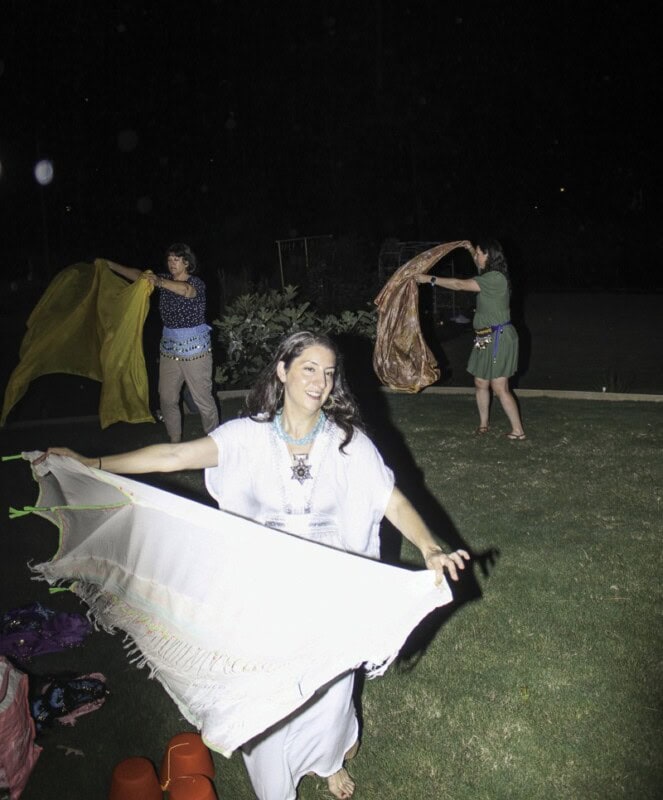
Once everyone was properly acquainted, the group gathered outside for a Mizrahi dance party just like the childhood Dratch described. Before dancing, everyone selected traditional scarves, dresses, and hats to adorn themselves with.
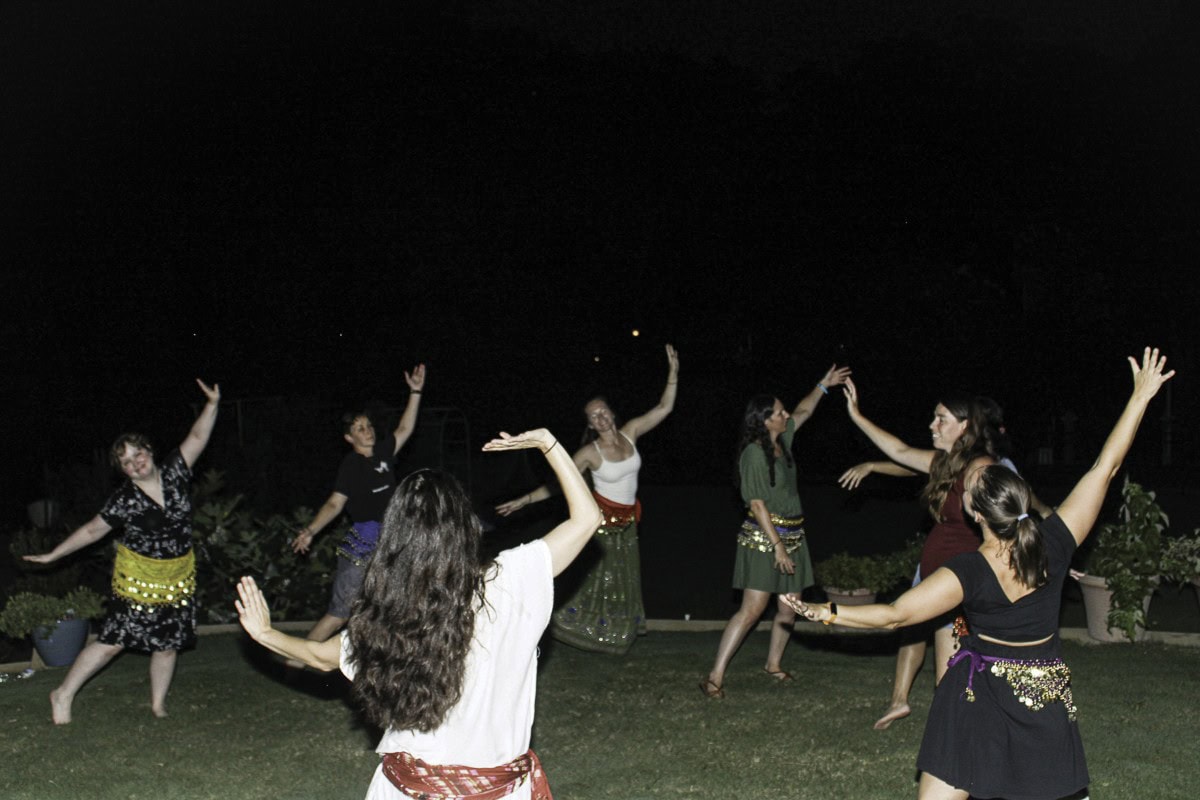
Dratch took the group on what she called “a little dance tour throughout the Jewish Middle East” – particularly Yemenite, Moroccan, and Bukharian dance. Participants learned two-steps, chest and hip isolations, and more as they danced to the lively music that boomed from the large speaker.
Dancing freely doesn’t come easily to everyone, but doing so in such a supportive group setting made it a lot easier. The backyard was full of joy and laughter that evening as participants joked about the potential noise disruption the event was creating.
Dratch believes that the physical, communal nature of the evening was the whole point. “It’s one thing to read about it or to watch a video, but to actually move your body… the whole point of it is just really to enjoy each other, to dance, to be together, to kind of let loose. That is where real connection and community is made.”
Women’s Rosh Chodesh Mizrahi Dance
Thursdays, October 15 and November 12, 7 – 8 pm
Simon Family JCC
Free. Registration required. Women only.