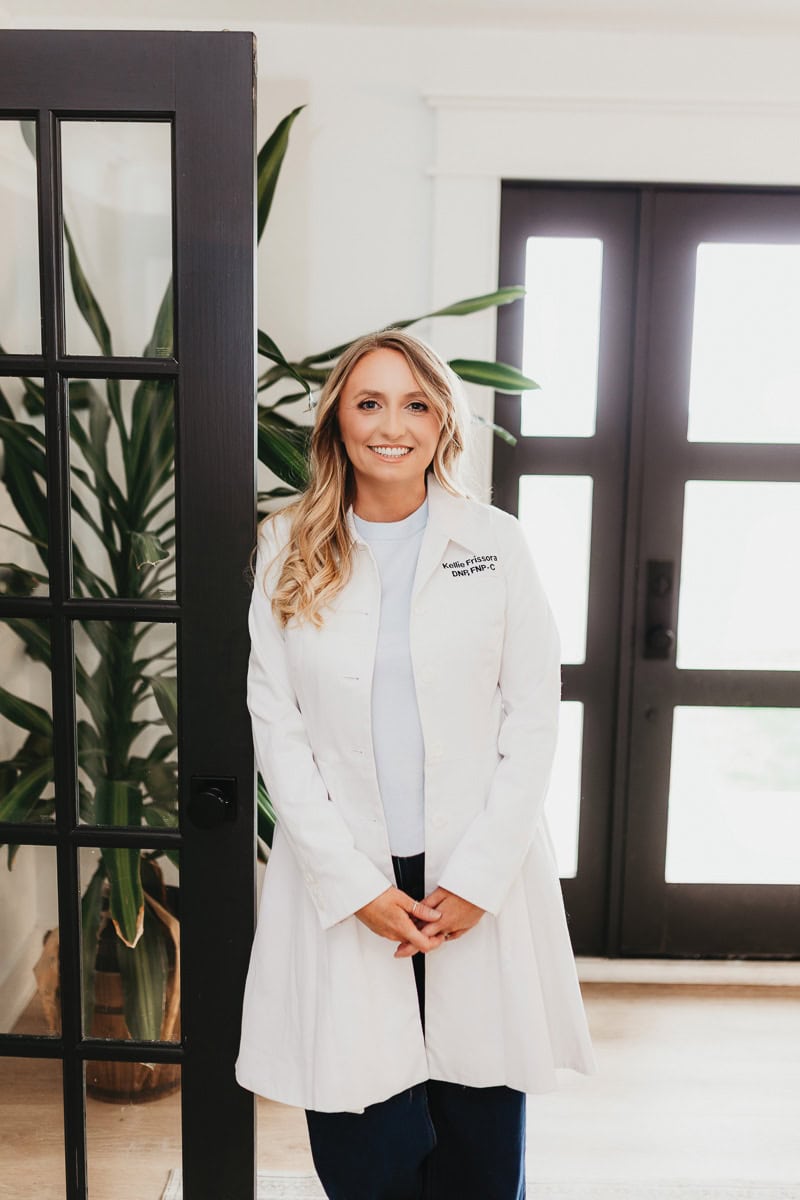
From postpartum recovery to perimenopause, women experience a range of life stages that can affect hormones and overall health.
Dr. Kellie Frissora, a nurse practitioner and mother of three young children, understands how easily personal health can take a back seat during these life stages.
“I commonly saw patients for the same issue repeatedly,” Frissora says. “I heard over and over again, ‘My primary care said that my labs are normal, but I just don’t feel like myself. I don’t have the energy I once had. I’m just getting more exhausted than I usually do.’”
This reality led her to launch Frissora Functional Wellness, a fully virtual concierge functional medicine practice focused on hormone health and whole-body wellness. Frissora conducts all patient visits through virtual consultations.
Frissora worked as a nurse in a primary care setting for three years before becoming a nurse practitioner. She earned her Doctor of Nursing Practice degree as a family nurse practitioner in 2019 and has since worked in primary care and medical weight loss settings. She has also completed additional training through the Institute of Functional Medicine and the Bioidentical Hormone Replacement Therapy Training Academy.
Frissora says she often encountered patients whose symptoms persisted despite standard treatment. Many reported ongoing fatigue, brain fog, weight gain, anxiety, sleep issues, and other concerns – even when routine lab work appeared normal.
Those experiences steered her toward functional medicine, an approach that seeks to identify underlying causes rather than simply manage symptoms.
“Functional medicine really gives you not only the education but the desire to figure out why the patient is feeling the way they are and help get to the root cause,” Frissora says.
Unlike traditional visits that may center on a specificdiagnosis, Frissora says her approach explores multiple systems at once.
“We look at your lifestyle factors and your environmental factors, because what people don’t realize is that if they have a thyroid issue or a gut issue, or a hormone issue, it’s usually just one piece of the puzzle,” she says.
Frissora emphasizes that hormones affect people of all genders, influencing everything from brain and bone health to metabolism and stress response.
While functional medicine is sometimes viewed as alternative medicine, Frissora says her practice remains grounded in evidence-based care.
“We still use evidence-based medicine. We still use lab testing. We still go by clinical guidelines,” she says.
The process begins with a free 15-minute discovery call to determine whether a patient’s needs align with the services offered. Patients then complete a comprehensive wellness consultation, typically lasting about 90 minutes, during which Frissora reviews medical history, symptoms, and health goals before ordering individualized laboratory testing.
Services are not covered by insurance and are paid for out-of-pocket.
Depending on the testing required, results are generally reviewed within two to four weeks. From there, patients receive personalized recommendations that may include lifestyle modifications, nutritional support, and supplements or prescriptions when appropriate.
Frissora tells of an anonymized example of a patient who benefited from this approach:
A woman came in experiencing fatigue, weight gain, poor sleep, and brain fog. She had previously been told her lab work was normal, but her symptoms were significantly affecting her quality of life.
Using a functional medicine approach, Frissora evaluated nutrition, blood sugar regulation, stress, sleep habits, hormone balance, and lifestyle patterns. The patient was given a personalized plan that included targeted nutrition changes, lifestyle interventions, and evidence-informed supplementation.
Over time, the patient experienced improvements in energy, sleep quality, mental clarity, and overall well-being.
Frissora notes that while results vary, this type of approach can help identify contributing factors that may not be addressed in traditional symptom-focused care.
Frissora emphasizes that patient safety remains central to her practice.
“If I identify a condition that requires further evaluation, specialized treatment, or urgent medical attention, I coordinate care with the patient’s primary care provider and appropriate specialists,” she says. “This may include cardiology, oncology, endocrinology, gastroenterology, mental health providers, or other specialists.”
She says she views functional medicine as complementary to conventional care, with the goal of ensuring patients receive comprehensive treatment that addresses both medical conditions and lifestyle factors.
“It’s a partnership,” she says. “I want you to be as invested in your health as I’m going to be.”
Ultimately, she says, the aim is not just to treat symptoms, but to help patients return to a place where they feel good in their bodies.
“They can still feel like themselves. They can feel good, and they can love the way they feel.”
Local nurse practitioner offers different approach to hormone health